👋 In Brief30 sec read
The frontier has shifted significantly this week with the arrival of OpenAI’s GPT-5.6 family and SpaceXAI’s Grok 4.5, signaling a new baseline for agentic intelligence and enterprise-grade reasoning. As these models move into production, the focus is rapidly pivoting from raw parameter scaling to token-efficient agentic workflows and specialized tool-use architectures.
📌 Top Stories — Today's Biggest Moves (skim)
The day's highest-signal stories, ranked by builder-relevance — each linked to its primary source.

⚡ The Pulse — If You Only Read One Thing90 sec read
The day's signal in 90 seconds — start here.
🎯 Today's Game-Changer
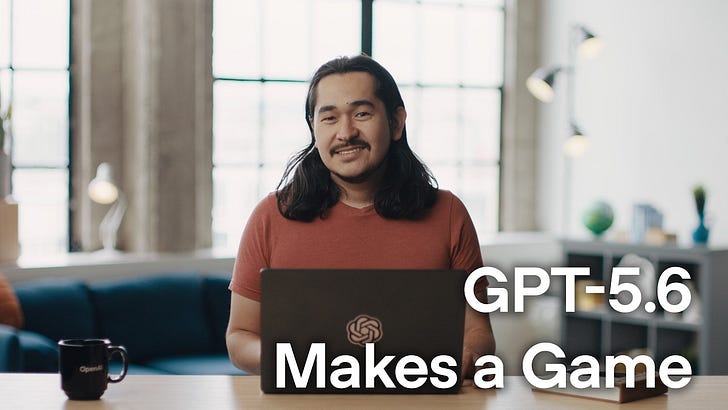
OpenAI has released GPT-5.6, a new flagship model family available in three sizes—Luna, Terra, and Sol—now integrated as the preferred engine for
Microsoft 365 Copilot. This release marks a critical inflection point in the "intelligence-per-dollar" race, with the model family optimized for high-throughput agentic tasks and complex reasoning, effectively setting the new standard for enterprise-grade LLM deployments.
📍 In a Nutshell
SpaceXAI launched Grok 4.5 — the first Opus-class model released following the Cursor acquisition, pushing the boundaries of real-time coding assistance.
Meta released Muse Spark 1.1 — now featuring an API with significant improvements in agentic tool calling and computer use.
Microsoft Research shipped Aurora 1.5 — adding 22 new variables and probabilistic ensemble forecasting for Earth-system modeling.
barebrowse released — a tool that converts URLs into pruned ARIA snapshots, drastically reducing token consumption for agentic web navigation.
UniClawBench published — a new universal benchmark specifically designed to evaluate proactive agents on real-world tool-use tasks.
NVIDIA updated NeMo — providing new pipelines for synthetic data generation specifically for financial NLP research.
AWS published MCP design guidelines — detailing practical context engineering approaches to fix common tool-calling failures.
🚀 Opportunity of the Day2 min read
The single best thing to build right now.
Agentic Browser-Snapshotting Engine
- The gap: Current agentic web-browsing relies on raw HTML or DOM trees, which are token-heavy and noisy, leading to poor reasoning performance and high costs (highlighted by the
- Why now: The release of GPT-5.6 and Grok 4.5 provides the reasoning depth required to interpret semantic trees, while the community is actively seeking ways to reduce context-window bloat for agents.
- Build as: An OSS library that acts as a middleware between the browser and the LLM, outputting a "Semantic ARIA Tree" that preserves accessibility context while stripping ads, scripts, and layout boilerplate.
- Wedge & moat: Start by targeting local-first agent developers (r/LocalLLaMA) who are context-constrained; build a moat by training a small, specialized vision-language model (VLM) to prioritize "actionable" elements in the snapshot.
- Already heating up: The
HN regarding agentic efficiency.
- Closest existing solution:
Playwright is the standard for automation, but it is not optimized for LLM-context; the opening is for a *semantic-first* extraction layer that is LLM-native.
- First step this week: Build a prototype that takes a URL, extracts the ARIA tree, and benchmarks the token reduction vs. raw HTML on a standard task (e.g., "find the price of X on this page").
📊 Stack Signals — Pick Your Tools3 min read
What moved in tools, benchmarks & funding.
Benchmarks & Evals
Repo & Model Velocity
- barebrowse⚠ — rapidly gaining traction for its ability to prune HTML into semantic ARIA snapshots for LLM agents.
- OpenFox⚠ — trending for its implementation of speculative cache warming to reduce LLM latency.
Funding & Launches — with Thesis
GPT-5.6 (OpenAI) — Thesis: Scaling intelligence-per-dollar to dominate the enterprise agentic market.
🔬 Deep Reads — For When You Have Time (skip if rushed)
The one paper to actually read this week.
📖 The One Deep Read
Workflow as Knowledge: Semantic Persistence for LLM-Mediated Workflows by Emanuele Quinto and Carlo Andrea Rozzi. This paper is essential because it moves beyond simple prompt-chaining to propose a Lisp-like semantic persistence layer for agentic workflows, effectively solving the "state-forgetting" problem in long-horizon tasks. Read it to understand how to build robust, checkpointable agent systems.
Read it for: The architecture for semantic state persistence that will likely become the standard for agentic middleware.
📑 Supporting Research
LongE2V — A novel approach to long-horizon video reconstruction using event-based streams and diffusion models.