👋 In Brief30 sec read
The industry is rapidly pivoting from general-purpose chat to high-stakes agentic execution, with recent benchmarks and demos highlighting a massive leap in one-shot UI generation and causal reasoning. As labs shift focus toward ROI-driven metrics and physical-world safety, the primary bottleneck for builders is no longer model capability, but the lack of rigorous verification and causal guardrails for autonomous agents.
📌 Top Stories — Today's Biggest Moves (skim)
The day's highest-signal stories, ranked by builder-relevance — each linked to its primary source.


⚡ The Pulse — If You Only Read One Thing90 sec read
The day's signal in 90 seconds — start here.
🎯 Today's Game-Changer
Kimi K3 has demonstrated a breakthrough in agentic UI synthesis, with a viral demo showing the model recreating a functional macOS27 interface in a web browser in a single 3.5-hour session. This capability, combined with its high performance on the
Artificial Analysis leaderboard, signals that we have moved beyond simple code generation into complex, multi-step system architecture synthesis, forcing a re-evaluation of how we build and validate frontend-heavy agentic workflows.
📍 In a Nutshell
Claude Fable 5 is now included in all Max and Team Premium plans, signaling Anthropic’s push for wider agentic adoption.
DeepSeek continues to dominate price-to-performance metrics, challenging the cost-efficiency of frontier models from US labs.
The State of Open Source AI report highlights a growing divergence between proprietary frontier models and the rapid iteration speed of open-weight ecosystems.
MM-IssueLoc introduces a new benchmark for multimodal repository-level issue localization, addressing the gap in visual evidence handling for software engineering agents.
Kaiser Nurses report highlights the growing friction between AI-driven surveillance and operational reality in high-stakes environments.
🚀 Opportunity of the Day2 min read
The single best thing to build right now.
Agentic UI-Synthesis Auditor (AUSA)
- The gap: While models like Kimi K3 can now generate complex, functional UIs in one shot, there is zero automated infrastructure to verify these outputs against existing design systems, accessibility standards (WCAG), or security policies before they are deployed.
- Why now: The recent
Kimi K3 macOS27 demo proves that one-shot UI generation is now a reality, creating an immediate need for "pre-flight" validation to prevent broken or non-compliant interfaces from reaching production.
- Build as: A developer tool (CLI/SDK) that integrates into CI/CD pipelines to audit agent-generated UI code against a project's design tokens and accessibility rules.
- Wedge & moat: Start by targeting frontend-heavy SaaS teams using agentic coding assistants; the moat is the proprietary library of "compliance-as-code" rules that compound as more teams adopt your auditor.
- Already heating up: (Speculative — no direct validation signal yet, though the
- Closest existing solution:
Storybook (for visual testing) and
Axe-core (for accessibility), but neither is designed to audit *agent-generated* code or enforce design-system consistency in real-time during the synthesis process.
- First step this week: Build a prototype that takes a generated React component and a JSON-based design system, then uses a vision-language model to verify if the component's visual output matches the design tokens.
📊 Stack Signals — Pick Your Tools3 min read
What moved in tools, benchmarks & funding.
Benchmarks & Evals
Artificial Analysis Leaderboard: Kimi K3 has surged to the top, significantly outperforming expectations on price-to-performance.
Repo & Model Velocity
- nascheme/quixote: A vintage Python web framework that received a surprise update, sparking interest in how LLMs interact with legacy code.
Funding & Launches — with Thesis
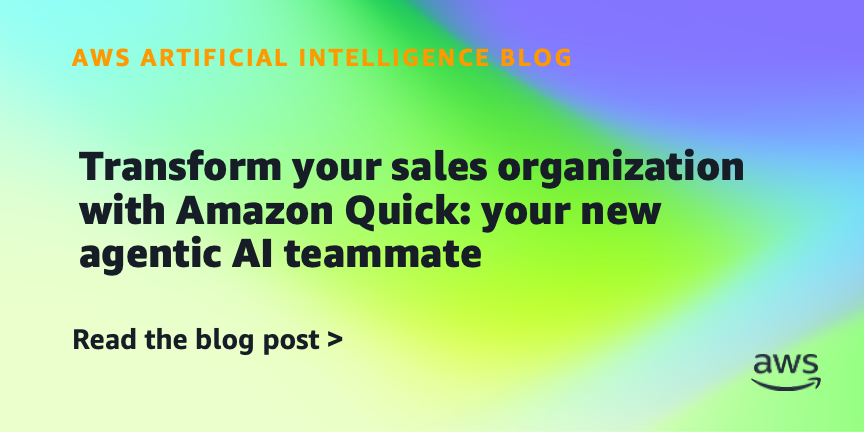
Amazon Quick: Thesis: Verticalized agentic workflows for sales, moving from "chat" to "CRM-integrated action."
🔬 Deep Reads — For When You Have Time (skip if rushed)
The one paper to actually read this week.
📖 The One Deep Read
Bridge Evidence: Static Retrieval Utility Does Not Predict Causal Utility in Multi-Step Agentic Search by Debayan Mukhopadhyay and Utshab Kumar Ghosh. This paper is essential because it fundamentally challenges the current RAG paradigm, proving that semantic similarity is a poor proxy for task success in agentic workflows. Read it for: The realization that your RAG pipeline is likely optimizing for the wrong metric.
📑 Supporting Research