👋 In Brief30 sec read
The ecosystem is bifurcating between high-scale enterprise integration and extreme local-first efficiency. With OpenAI’s latest model suite hitting Bedrock and local agentic models hitting 59 t/s on commodity hardware, the gap between cloud-native and edge-native performance is closing faster than anticipated.
📌 Top Stories — Today's Biggest Moves (skim)
The day's highest-signal stories, ranked by builder-relevance — each linked to its primary source.
⚡ The Pulse — If You Only Read One Thing90 sec read
The day's signal in 90 seconds — start here.
🎯 Today's Game-Changer
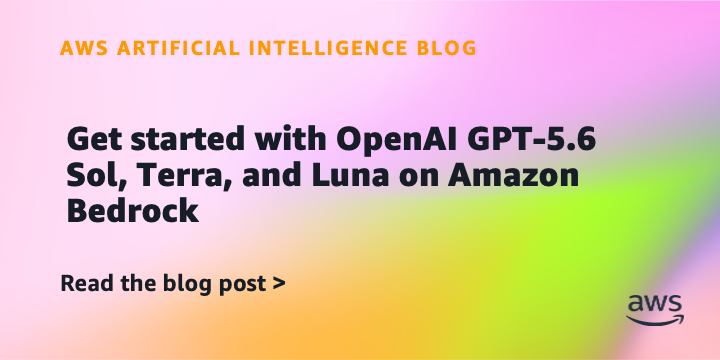
OpenAI has released 
bedrock-mantle endpoint, complete with native prompt caching and managed infrastructure, effectively removing the "API-reliability" barrier for production-grade agentic workflows.
📍 In a Nutshell
Ruff v0.16.0 shipped with breaking changes to default linting rules, forcing immediate CI/CD pipeline audits for Python-heavy AI stacks.
POCKET-35B achieves 59 t/s on CPU, demonstrating that agentic reasoning no longer requires dedicated GPU clusters for inference.
Debian LLM Proposals signal the start of formal governance debates regarding the integration of AI-generated code into stable Linux distributions.
Cloudflare AI Traffic updates allow granular control over bot-based model training, providing a new defensive layer for proprietary data.
Stanford SIEPR Brief provides empirical data separating AI-driven productivity gains from broader labor market volatility.
AI Mania Critique highlights the growing friction between LLM-driven decision-making and human-in-the-loop accountability.
🚀 Opportunity of the Day2 min read
The single best thing to build right now.
Local-Agentic State-Sync (LASS)
- The gap: Current agentic frameworks rely on centralized state management (e.g., LangGraph, LlamaIndex) which introduces latency and privacy risks when running on edge devices.
- Why now: The release of
- Build as: An OSS library (Python/Rust) that provides a local-first, CRDT-based state graph for agents, allowing multiple local models to share context without a central server.
- Wedge & moat: Target privacy-conscious enterprise developers building "offline-first" agents; the moat is the performance gain from zero-latency state retrieval compared to cloud-based RAG.
- Already heating up: (speculative — no direct validation signal yet, though local-inference interest is at an all-time high on r/LocalLLaMA).
- Closest existing solution: LlamaIndex is the standard for state management, but it is heavily optimized for cloud-based RAG and lacks native support for peer-to-peer local agent state synchronization.
- First step this week: Prototype a simple CRDT-based memory buffer that allows two local
llama.cppinstances to share a common "thought-graph" via a local socket.
📊 Stack Signals — Pick Your Tools3 min read
What moved in tools, benchmarks & funding.
Benchmarks & Evals
- No notable leaderboard moves in the last 48 hours; the industry is currently digesting the GPT-5.6 release.
Repo & Model Velocity
POCKET-35B — Trending for its unprecedented CPU-based inference speed.
- Ruff — Seeing massive velocity following the v0.16.0 release and subsequent CI/CD failures.
Funding & Launches — with Thesis
🔬 Deep Reads — For When You Have Time (skip if rushed)
The one paper to actually read this week.
📖 The One Deep Read
What is really happening to jobs? Separating AI hype from reality (Stanford SIEPR). This brief is essential for understanding the actual economic impact of AI, moving beyond the "AI will replace everyone" narrative to look at specific task-level productivity shifts. Read it for: A data-driven framework to evaluate where your AI tools are actually creating value versus where they are just automating low-impact tasks.
📑 Supporting Research
Conformer-Based Audio-Native LLMs (et al.) — Explores the architecture behind models like GigaChat Audio.