
👋 In Brief30 sec read
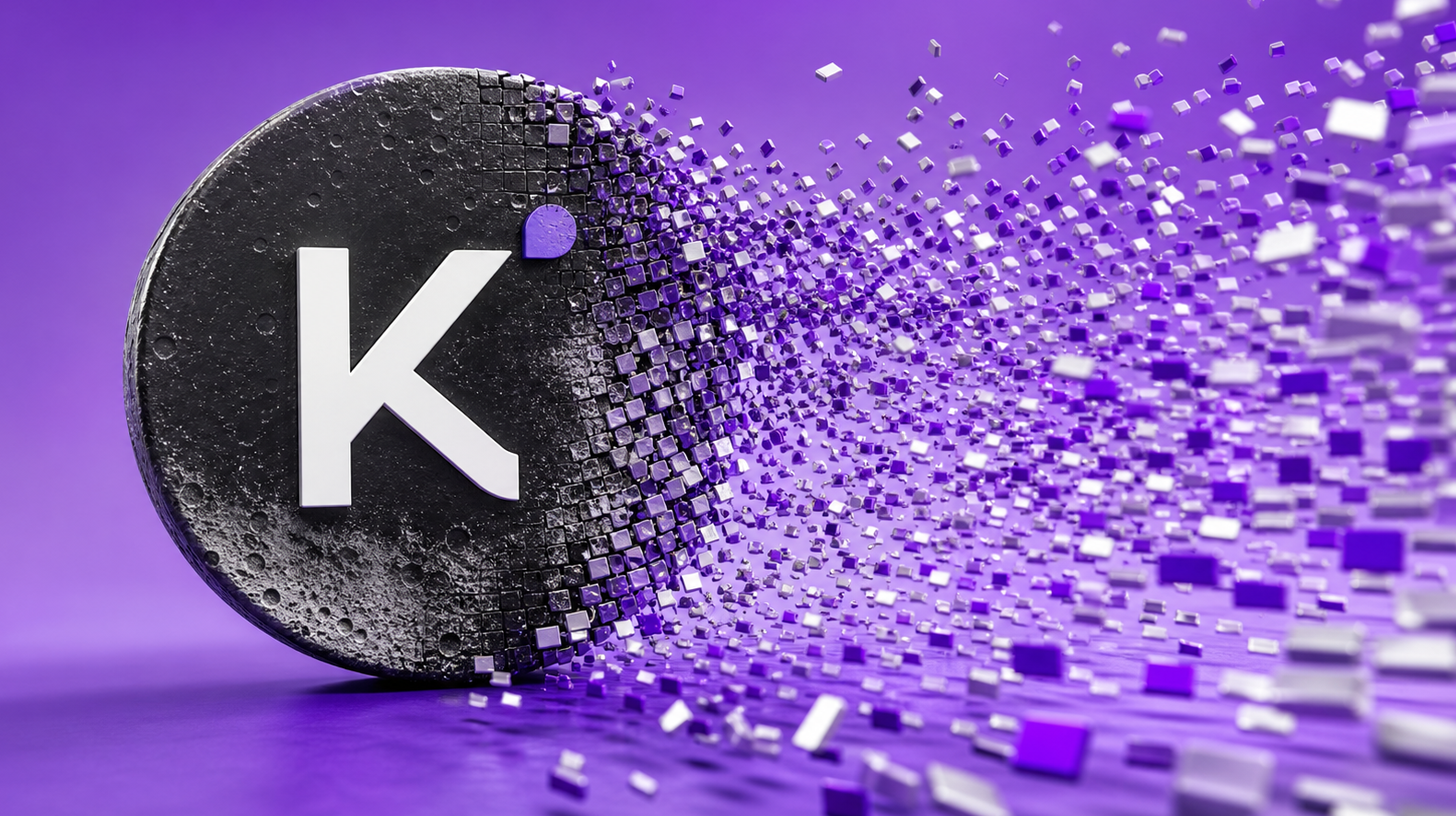
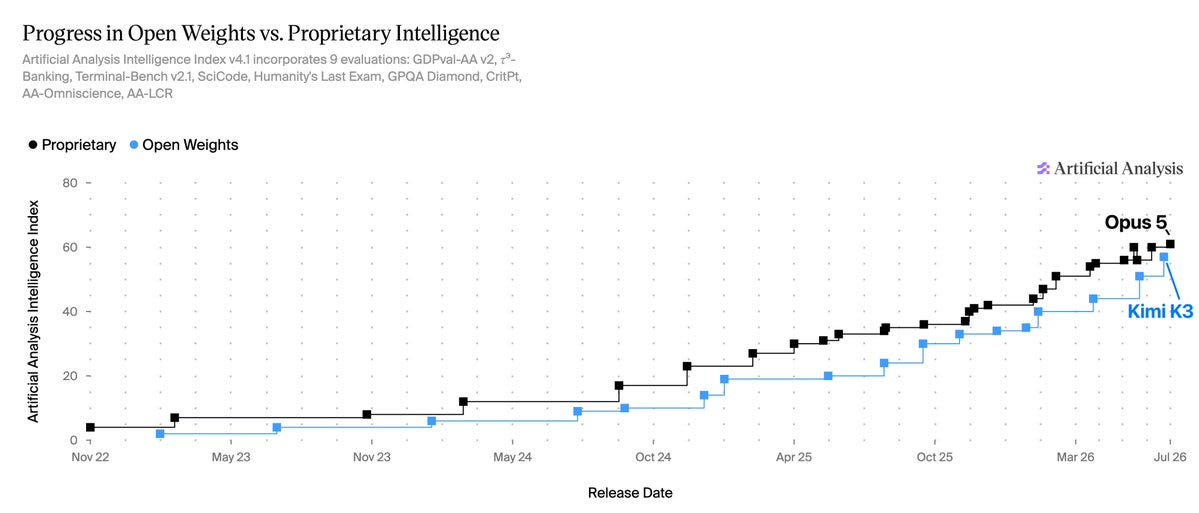
The release of Moonshot AI's 2.8T parameter Kimi K3 has effectively shattered the ceiling for open-weights performance, forcing a rapid recalibration of the "open vs. closed" capability gap. As the ecosystem pivots toward massive, dense open models, the immediate engineering challenge shifts from model access to efficient inference and task-aware knowledge compression.
📌 Top Stories — Today's Biggest Moves (skim)
The day's highest-signal stories, ranked by builder-relevance — each linked to its primary source.


⚡ The Pulse — If You Only Read One Thing90 sec read
The day's signal in 90 seconds — start here.
🎯 Today's Game-Changer
Moonshot AI has released the weights for Kimi K3, a 2.8 trillion parameter model, marking the largest open-weights release to date at 1.56TB. This release fundamentally invalidates the assumption that open-weights models are inherently "second-tier" or smaller than proprietary frontier models, forcing a total reassessment of enterprise reliance on closed-source APIs for high-reasoning tasks.
📍 In a Nutshell
- AWS introduces Task-Aware Knowledge Compression (TAKC) — a new method to pre-compress enterprise knowledge bases into task-specific representations to bypass RAG scaling limits.
source
- Qwen3.7-flash spotted on OpenRouter — early evidence suggests a new small-MoE architecture with a native 1M context window, signaling a move toward cheaper, high-context inference.
source
- Reasoning-Medical-27B released — a Qwen3.6-27B finetune optimized for clinical reasoning and medical genetics.
- NVIDIA Ising Calibration released — an open-source VLM designed to automate quantum computer calibration via in-context learning.
source
- Sol-Attn paper published — introduces training-free dynamic sparse attention to reduce inference bottlenecks in long-sequence video generation.
source
- Data Pyramid for Embodied Manipulation — a new framework for scaling embodied agents by coupling observations with physical state data.
- Professor catches 32/35 students using AI — a viral case study on using "invisible prompt traps" to detect LLM-generated academic work.
source
- Nvidia's $750B deals spark circular financing fears — market analysts are raising concerns over the sustainability of AI infrastructure spending.
source
🚀 Opportunity of the Day2 min read
The single best thing to build right now.
Task-Specific Knowledge Distiller (TSKD)
- The gap: Traditional RAG systems are failing on complex analytical tasks that require cross-document synthesis, as noted in the
- Why now: The release of 2.8T parameter models like Kimi K3 makes it computationally feasible to perform high-quality, local knowledge distillation without relying on massive, expensive API calls to proprietary models.
- Build as: OSS library (Python/Rust) that integrates with existing vector databases (Pinecone/Weaviate) to perform "knowledge distillation" passes on document chunks.
- Wedge & moat: Target enterprise legal/medical teams struggling with RAG hallucinations; the moat is the proprietary "distillation recipe" that optimizes context for specific reasoning tasks.
- Already heating up: AWS is actively promoting TAKC as a solution, and there is significant discussion on r/LocalLLaMA regarding the limits of RAG (e.g., 1.2k upvotes on recent threads regarding context window limitations).
- Closest existing solution: LlamaIndex provides RAG orchestration, but lacks a native, automated "knowledge compression" layer that transforms raw data into task-optimized latent representations.
- First step this week: Prototype a "distillation agent" that takes a set of documents and a specific task (e.g., "summarize clinical trial risks") and outputs a compressed, task-aware vector index using a local model.
📊 Stack Signals — Pick Your Tools3 min read
What moved in tools, benchmarks & funding.
Benchmarks & Evals
- LMSYS Arena: No major leaderboard shifts in the last 48 hours, though community sentiment is heavily focused on the impact of Kimi K3's 2.8T parameter count on future reasoning benchmarks.
- New Benchmark:
ERUnderstand, a new benchmark for evaluating VLMs on structured Entity-Relationship diagrams, signals a shift toward specialized visual reasoning.
Repo & Model Velocity
Funding & Launches — with Thesis
- Nvidia Circular Financing Concerns: Bloomberg report on $750B in deals; Thesis: The market is beginning to price in a potential correction in AI infrastructure spending, favoring companies that can demonstrate ROI via efficiency rather than raw scale.
🔬 Deep Reads — For When You Have Time (skip if rushed)
The one paper to actually read this week.
📖 The One Deep Read
Data Pyramid for Embodied Manipulation by Yifan Ye et al. This paper is the most important read this week because it addresses the fundamental "data bottleneck" in robotics. It proposes a hierarchical data structure that bridges the gap between internet-scale vision data and physical-world action states, which is the missing link for general-purpose embodied agents.
Read it for: A new taxonomy for embodied data that will likely become the standard for training future robotics foundation models.
📑 Supporting Research