👋 In Brief30 sec read
The agentic stack is rapidly shifting from monolithic orchestration to modular, framework-driven architectures, highlighted by Microsoft’s release of Orchard and AWS’s integration of automated reasoning into Bedrock. Today’s briefing focuses on how these primitives are finally moving from research papers into production-grade infrastructure, enabling more reliable, long-horizon agentic systems.
📌 Top Stories — Today's Biggest Moves (skim)
The day's highest-signal stories, ranked by builder-relevance — each linked to its primary source.


⚡ The Pulse — If You Only Read One Thing90 sec read
The day's signal in 90 seconds — start here.
🎯 Today's Game-Changer
Microsoft Research has released Orchard, an open-source framework designed to standardize the training and evaluation of AI agents across diverse task types. By enabling researchers to reuse infrastructure components and decouple agent logic from model-specific training, Orchard provides the first credible path toward a unified "agent-OS" layer that allows smaller models to achieve performance parity with frontier models in specialized domains.
📍 In a Nutshell
Qwen 3.8 Max (2.4T) released, setting a new high-water mark for open-weight coding and reasoning models.
Amazon Bedrock now supports automated reasoning for policy refinement, allowing agents to self-correct formal-logic errors in real-time.
NVIDIA Vera storage benchmarks show significant gains in KV-cache retrieval, critical for low-latency agentic memory.
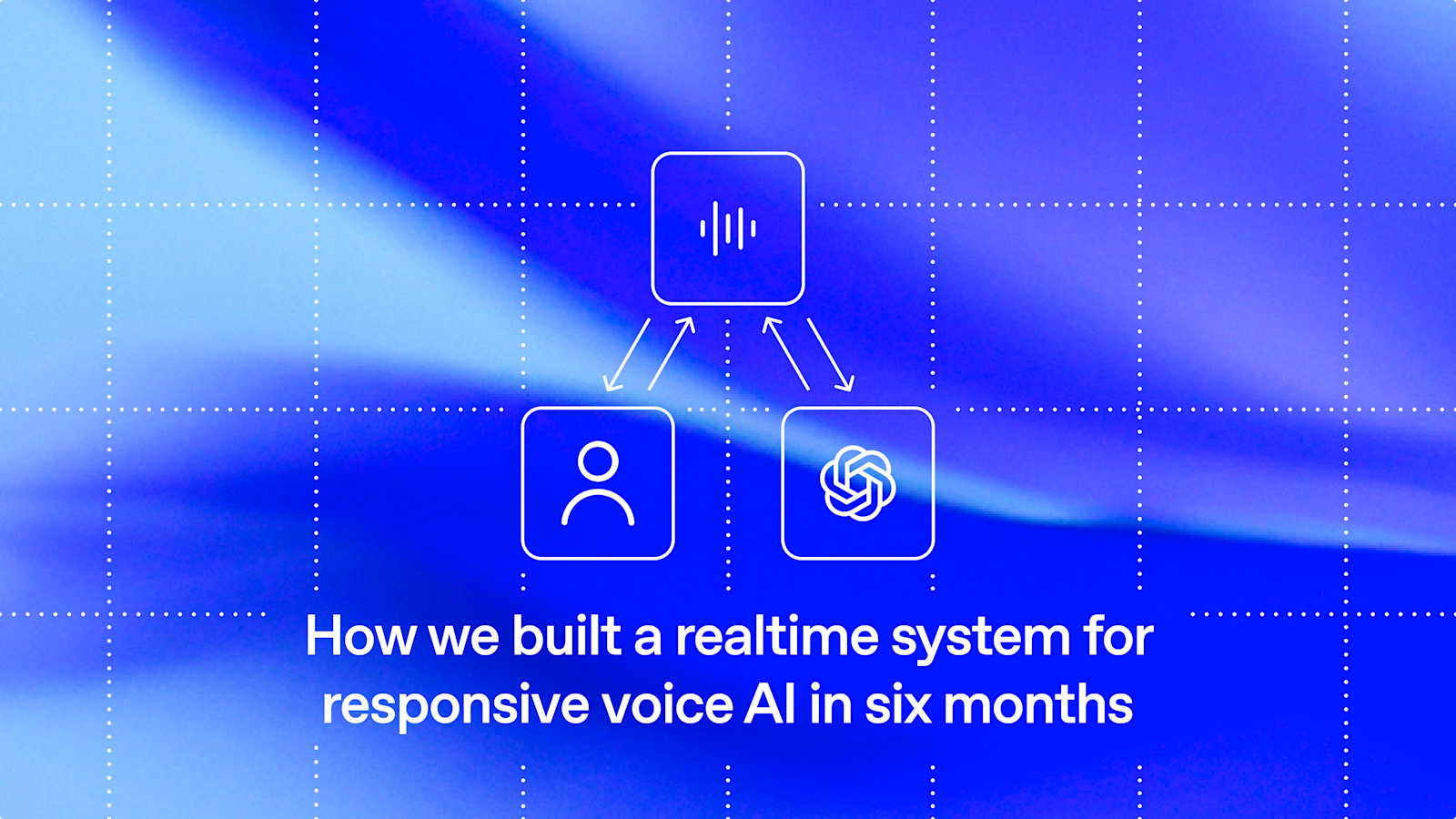
OpenAI GPT-Live launched, enabling turnless, low-latency voice interaction via a new continuous speech model.
LongHorizon-Harness paper introduces a new framework for managing interdependent, multi-step agent tasks.
AtumAI introduces a principled framework for agentic generation of datacenter control-plane policies.
🚀 Opportunity of the Day2 min read
The single best thing to build right now.
Agentic Policy-Compliance Auditor (APCA)
- The gap: As agents gain autonomy in enterprise environments (e.g., F1’s data operations), there is no standardized way to verify that agentic tool-use and reasoning traces comply with formal security policies.
- Why now: The convergence of
- Build as: A middleware library that sits between the agent harness and the tool-execution layer, intercepting tool calls to validate them against a formal logic policy graph.
- Wedge & moat: Start by auditing "shadow AI" agents in regulated industries (FinTech/Healthcare); the moat is the proprietary library of formal-logic policy templates that compound as you ingest more enterprise compliance standards.
- Already heating up: (speculative — no direct validation signal yet, though Bedrock’s recent release confirms enterprise demand for automated reasoning).
- Closest existing solution:
Guardrails AI, which focuses on output validation; APCA differs by focusing on *proactive* formal-logic verification of tool-use policies before execution.
- First step this week: Prototype a Bedrock-based validator that takes a JSON-schema tool call and a formal policy file, returning a "deny/allow" decision based on the Bedrock reasoning engine.
📊 Stack Signals — Pick Your Tools3 min read
What moved in tools, benchmarks & funding.
🧱 Standards, Protocols & the Agent Platform Stack
Orchard [Harness/Orchestration] — Architect's take: Prototype immediately; this is the most significant framework release for standardizing agent training this year.
Artifacts Hub [Memory/Context] — Architect's take: Watch; this is the first attempt at a centralized registry for agentic artifacts.
Benchmarks & Evals
Repo & Model Velocity
- Qwen 3.8 Max — Trending for its 2.4T parameter scale and state-of-the-art coding performance.
- llama.cpp — Seeing massive migration activity as users move away from GUI-heavy tools like LM Studio.
Funding & Launches — with Thesis
Baseten ($13B Series F) — Thesis: Betting that "inference engineering" (optimizing model serving for specific agentic workloads) is the most valuable layer of the stack.
🔬 Deep Reads — For When You Have Time (skip if rushed)
The one paper to actually read this week.
📖 The One Deep Read
Orchard: An open framework for scalable agentic AI by Peng et al. This paper is the definitive guide to the current state of agentic infrastructure. It details how to decouple agent logic from training, which is the key to scaling agentic systems in production. Read it for: The architectural blueprint for building modular, reusable agentic platforms.
📑 Supporting Research