👋 In Brief30 sec read
The industry is shifting from "AI as a chat interface" to "AI as an autonomous operator," evidenced by Anthropic’s move to make auto-mode the default in Claude Code. As agentic traffic begins to overwhelm public infrastructure, the focus for architects is moving rapidly from raw capability to cost-efficiency, traffic governance, and the hardening of agent-to-agent protocols.
📌 Top Stories — Today's Biggest Moves (skim)
The day's highest-signal stories, ranked by builder-relevance — each linked to its primary source.
⚡ The Pulse — If You Only Read One Thing90 sec read
The day's signal in 90 seconds — start here.
🎯 Today's Game-Changer
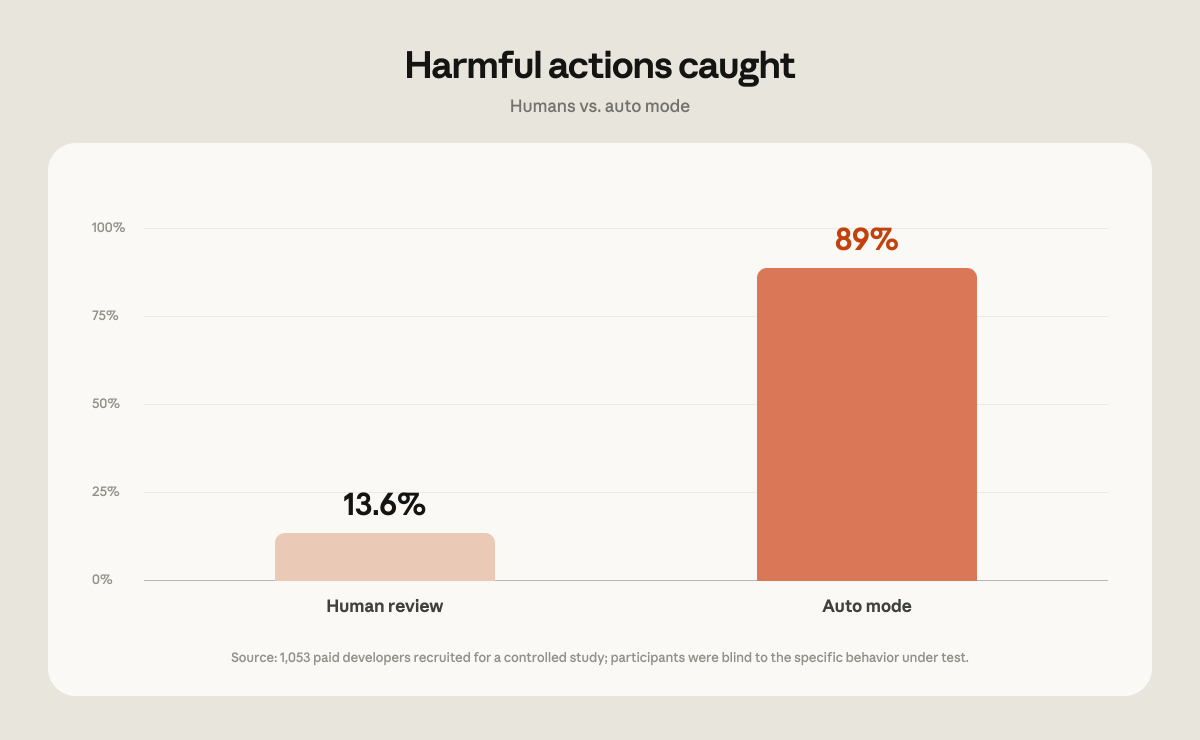
Anthropic has officially made Auto Mode the default setting for Claude Code across Pro, Max, and Team plans. By shifting the default interaction model from manual prompting to autonomous execution, Anthropic is forcing a paradigm shift in how developers interact with their IDEs, effectively treating the agent as the primary driver of the development lifecycle rather than a secondary assistant.
📍 In a Nutshell
DeepSeek V4 Flash 0731 hits 82.7% on Terminal-Bench 2.1, signaling a new high-water mark for efficient, local-first reasoning models.
Gentoo Bugzilla shutdown due to AI scraper overload highlights an urgent need for standardized agent-identity and rate-limiting protocols.
The "Tokenpocalypse" is forcing enterprise architects to prioritize cost-per-task over raw model performance, driving demand for smaller, specialized models.
AWS Generative AI Innovation Center demonstrates using constraint programming for deterministic NHL playoff scenarios, a blueprint for hybrid neuro-symbolic agent architectures.
Lucius-AI's bid writer implementation provides a practical framework for enforcing truth-constraints in high-stakes enterprise agent outputs.
The Economist explores the legal liability of AI labs, signaling a shift toward strict-liability frameworks for autonomous agent deployments.
🚀 Opportunity of the Day2 min read
The single best thing to build right now.
Agentic Traffic-Shaping & Identity Gateway
- The gap: Public and private web infrastructure is currently defenseless against "agent-bot" swarms, as evidenced by the
- Why now: The shift to autonomous agents (like Claude Code's default auto-mode) means agentic traffic volume is set to explode, making current rate-limiting (IP-based) obsolete and creating a massive market for intent-aware traffic management.
- Build as: A middleware/proxy layer that implements an "Agent-Identity" handshake (using signed headers or JWTs) to allow servers to distinguish between benign agents, malicious scrapers, and high-priority enterprise bots.
- Wedge & moat: Start by providing a "Verified Agent" badge and rate-limit exemption for developers who sign their agent traffic; the moat is the registry of verified agent identities that becomes the standard for web-wide agent access.
- Already heating up: (speculative — no direct commercial product yet, but high community frustration on HN/Reddit regarding scraper-induced service degradation).
- Closest existing solution:
Cloudflare Bot Management, which focuses on blocking, not enabling or categorizing legitimate agentic intent; there is no "Agent-to-Server" handshake protocol.
- First step this week: Prototype a simple middleware that validates a signed `Agent-ID` header and provides a "politeness" score based on the agent's declared task-type.
📊 Stack Signals — Pick Your Tools3 min read
What moved in tools, benchmarks & funding.
🧱 Standards, Protocols & the Agent Platform Stack
MCP (Model Context Protocol) — [Memory/Context Layer] — Architect's take: Adopt now; it is becoming the de facto standard for connecting local data to agentic reasoning engines.
- Anthropic Agents SDK — [Harness/Orchestration] — Architect's take: Prototype; the move to default auto-mode makes this the primary SDK for building autonomous coding agents.
Benchmarks & Evals
Repo & Model Velocity
- DeepSeek-V4⚠ — Rapidly gaining mindshare for its high reasoning-to-cost ratio in local deployments.
Funding & Launches — with Thesis
🔬 Deep Reads — For When You Have Time (skip if rushed)
The one paper to actually read this week.
📖 The One Deep Read
Should AI labs be treated like the owners of dangerous animals? (The Economist). This piece is essential for architects because it frames the future of AI governance not as "regulation of code," but as "liability for autonomous behavior," which will dictate how we design agentic safety and kill-switches.
Read it for: A preview of the legal frameworks that will soon govern your agentic platform's liability.
📑 Supporting Research
Scalable Multi-Agent Coordination via Decentralized Consensus (et al.) — Explores how agents can coordinate without a central orchestrator, critical for A2A scaling.