👋 In Brief30 sec read
The open-weights ecosystem just shifted significantly with Meta’s release of Muse Glimmer, a 30B model that is already being pushed to 1M context windows by the community. We are also seeing a clear trend toward specialized, low-latency agentic infrastructure, evidenced by the success of Amazon Bedrock AgentCore and the emergence of ultra-lightweight edge agents like Needle2.
📌 Top Stories — Today's Biggest Moves (skim)
The day's highest-signal stories, ranked by builder-relevance — each linked to its primary source.

⚡ The Pulse — If You Only Read One Thing90 sec read
The day's signal in 90 seconds — start here.
🎯 Today's Game-Changer
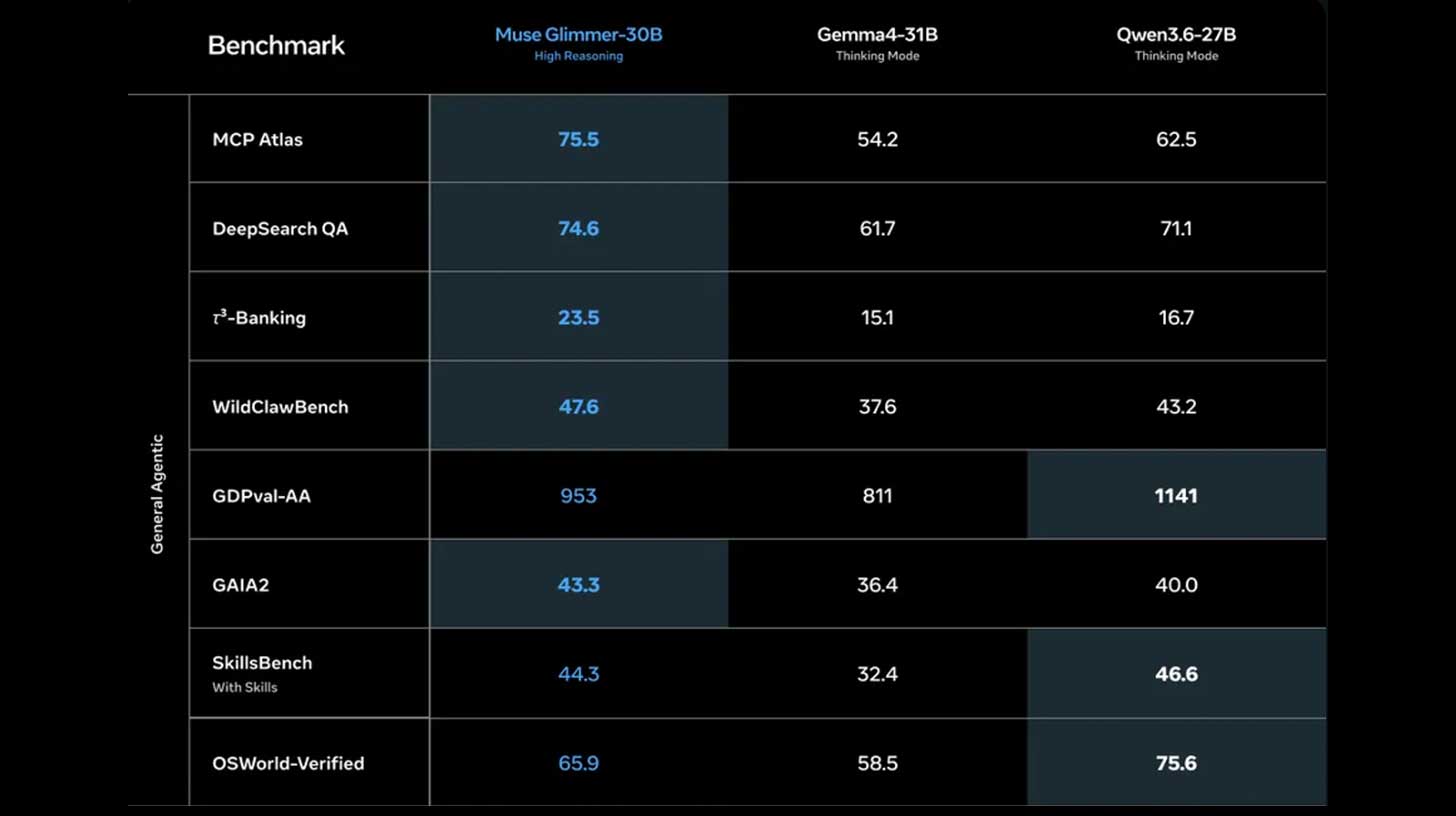
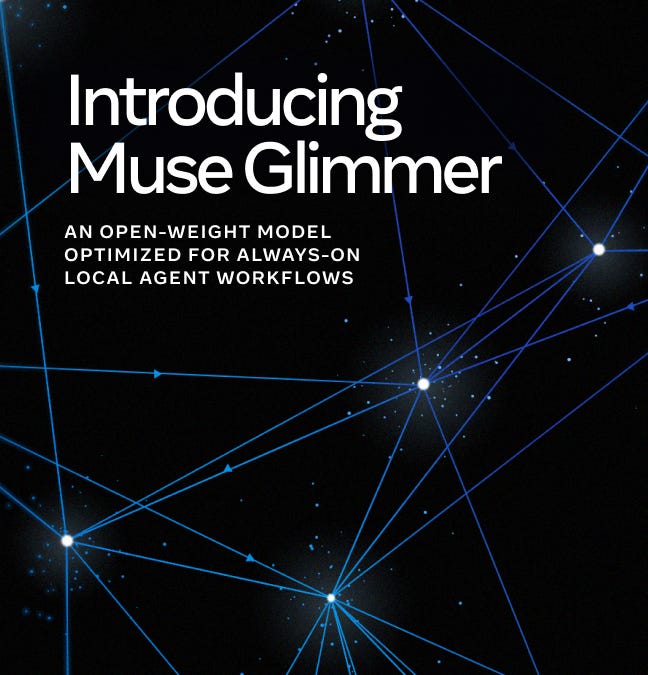
Meta has released Muse Glimmer, a 30B dense model under a permissive Apache 2.0 license. By combining a 120K+ native context window with high-performance optimization for local execution, this release effectively resets the baseline for open-weights agentic platforms and provides a viable, enterprise-ready alternative to proprietary models for local-first workflows.
📍 In a Nutshell
Qwen 3.8-27b is confirmed for release this week, signaling continued aggressive scaling in the open-weights mid-size tier.
Amazon Bedrock AgentCore enabled nOps to cut agent production time by 75%, proving the value of managed orchestration layers over self-hosted LangGraph stacks.
Needle2 launched as a 14MB agentic LLM optimized for microcontrollers and wearables, pushing the boundaries of edge-native tool calling.
OpenAI’s Model ML is now utilizing GPT-5.6 Sol to automate end-to-end finance workflows, including traceable Excel and PowerPoint generation.
NVIDIA Magpie TTS provides a new open-weights path for low-latency, multilingual voice agent deployment.
Claude’s new content marking standardizes how enterprise platforms should handle provenance and AI-generated attribution.
Stoa Markets launched as a YC S26 marketplace for GPU and AI server financing, addressing the capital-intensive nature of the current data center buildout.
🚀 Opportunity of the Day2 min read
The single best thing to build right now.
Agentic-Environment Sandbox & Replay Engine (AESRE)
- The gap: Current agent harnesses lack a standardized, containerized way to replay and debug multi-step agent trajectories, as highlighted by the
DSLE and
- Why now: The rise of "computer-use" agents and complex tool-calling chains makes non-deterministic failures impossible to debug without state-snapshotting and environment-replay capabilities.
- Build as: An OSS library that integrates with existing frameworks (LangGraph, Bedrock AgentCore) to provide "time-travel" debugging for agentic sessions.
- Wedge & moat: Start by targeting the "agentic-oncall" pain point—developers struggling to reproduce production agent failures—and build a moat through a proprietary state-diffing engine.
- Already heating up: The
- Closest existing solution: LangSmith⚠ provides tracing, but lacks the containerized environment-replay and state-isolation required for complex, multi-tool agentic workflows.
- First step this week: Build a prototype that captures a Docker-containerized environment state before and after a tool-call sequence, allowing for a "re-run" of the specific tool execution.
📊 Stack Signals — Pick Your Tools3 min read
What moved in tools, benchmarks & funding.
🧱 Standards, Protocols & the Agent Platform Stack
Benchmarks & Evals
Repo & Model Velocity
Muse Glimmer — Rapidly gaining traction for local agentic workflows; community tests confirm 1M+ context window stability.
Funding & Launches — with Thesis
🔬 Deep Reads — For When You Have Time (skip if rushed)
The one paper to actually read this week.
📖 The One Deep Read
SHE: Trajectory-driven Safety Harness Evolution for LLM Agents by Qu and Mao. This paper is essential because it shifts the focus of agent safety from static model weights to the dynamic, harness-level management of context and tools. It provides the blueprint for the next generation of secure agentic platforms.
Read it for: Understanding how to build safety mechanisms that evolve alongside the agent's reasoning trace.
📑 Supporting Research