👋 In Brief30 sec read
The frontier is aggressively pivoting toward "agentic speed" and high-fidelity world modeling, with OpenAI and Google pushing new tiers of low-latency inference to support real-time agentic loops. We are seeing a clear shift from simple chat-based assistants to complex, action-conditioned systems that require tighter integration between world models and browser-based execution environments.
📌 Top Stories — Today's Biggest Moves (skim)
The day's highest-signal stories, ranked by builder-relevance — each linked to its primary source.



⚡ The Pulse — If You Only Read One Thing90 sec read
The day's signal in 90 seconds — start here.
🎯 Today's Game-Changer
OpenAI has launched Ultrafast mode for GPT-5.6 Sol, a new API tier powered by Cerebras that achieves up to 750 output tokens per second—a 14× speed increase over standard inference. This release is the definitive signal that the "latency wall" for agentic systems is being dismantled, enabling real-time, multi-step reasoning loops that were previously bottlenecked by time-to-first-token and generation speed.
📍 In a Nutshell
Gemini 3.7 Flash released by Google DeepMind, re-establishing their competitive stance in the high-efficiency, high-reasoning model tier.
DreamX-Phi 1.0 introduces action-conditioned video world models for robotic manipulation, bridging the gap between language instructions and physical-world state prediction.
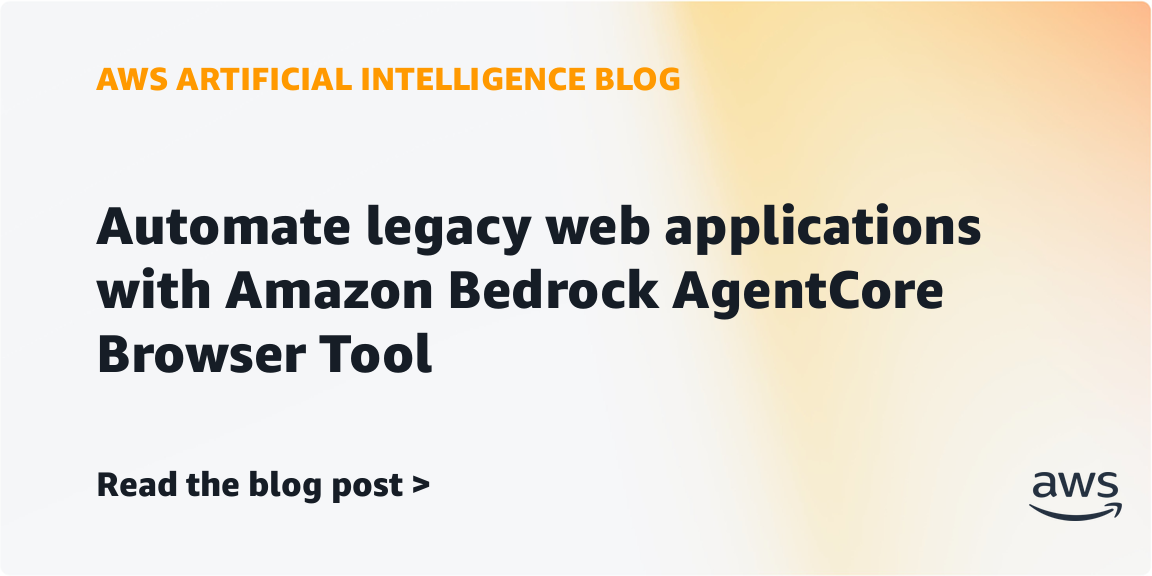
Amazon Bedrock AgentCore Browser Tool launched to automate legacy web apps, providing a standardized path for enterprise digital workers.
AutoDesign paper proposes meta-harness optimization for long-horizon agentic design, focusing on aligning model-harness systems with human intent.
Dali Rajic appointed as OpenAI's first CRO, signaling a shift toward aggressive enterprise revenue scaling.
🚀 Opportunity of the Day2 min read
The single best thing to build right now.
Agentic Latency-Budget Orchestrator (ALBO)
- The gap: Current agentic frameworks treat inference latency as a static cost, but as models like GPT-5.6 Sol (Ultrafast) and Gemini 3.7 Flash enable sub-millisecond token generation, we lack a middleware that dynamically adjusts reasoning depth based on real-time latency budgets.
- Why now: The arrival of 750 tokens/sec inference (OpenAI Ultrafast) makes "reasoning-on-the-fly" viable for UI-bound agents, but developers have no standard way to trade off between "fast-path" (low-latency) and "deep-path" (high-reasoning) model calls within a single session.
- Build as: A developer-facing middleware library (Python/TypeScript) that wraps LLM calls and automatically routes requests based on a user-defined latency budget and task complexity.
- Wedge & moat: Start by optimizing browser-automation agents (where latency is the primary UX killer); the moat is the proprietary "reasoning-budget" heuristic that learns which tasks require deep thought vs. fast reaction.
- Already heating up: (speculative — no direct validation signal yet, though the "need for speed" is the primary theme in recent newsletters like
The Rundown AI).
- Closest existing solution: LlamaIndex provides routing, but lacks a native, latency-aware "budgeting" engine that integrates with the new ultra-fast API tiers.
- First step this week: Prototype a wrapper that benchmarks the time-to-first-token for a multi-step agent task and implements a "fallback" to a smaller, faster model if the primary model exceeds a 200ms latency threshold.
📊 Stack Signals — Pick Your Tools3 min read
What moved in tools, benchmarks & funding.
🧱 Standards, Protocols & the Agent Platform Stack
llm-gemini 0.33 [Integrations] — Architect's take: Prototype with Gemini 3.7 Flash immediately to test the new latency benchmarks against your existing stack.
Benchmarks & Evals
Repo & Model Velocity
GLM 5.3: Released with high capacity-to-size ratios; gaining traction in local-LLM communities.
Funding & Launches — with Thesis
🔬 Deep Reads — For When You Have Time (skip if rushed)
The one paper to actually read this week.
📖 The One Deep Read
AutoDesign: Meta-Harness Optimization for Long-Horizon Agentic Design by Yaxin Luo et al. This paper is essential for architects building agentic platforms; it formalizes the "harness" as a first-class citizen in the agentic stack, moving beyond simple prompt-chaining to meta-optimized design loops. Read it for: The framework for aligning model-harness systems with human-intent metrics.
📑 Supporting Research