👋 In Brief30 sec read
The agentic stack is shifting from monolithic, non-deterministic prompting toward structured, deterministic orchestration frameworks. This week’s signal highlights a clear move by enterprise platforms to standardize multi-agent workflows, while the open-weights community continues to push the performance-per-parameter ceiling.
📌 Top Stories — Today's Biggest Moves (skim)
The day's highest-signal stories, ranked by builder-relevance — each linked to its primary source.


⚡ The Pulse — If You Only Read One Thing90 sec read
The day's signal in 90 seconds — start here.
🎯 Today's Game-Changer
The release of MARC v1 (Multi-Agent Reasoning and Coordination) marks a critical pivot in agentic architecture by replacing monolithic LLM prompting with deterministic multi-agent orchestration for complex reasoning tasks. By enforcing role-specialized agent coordination, MARC provides a blueprint for enterprise systems to move away from "black-box" agent loops toward verifiable, modular workflows, significantly reducing the unpredictability inherent in current agentic systems.
📍 In a Nutshell
AWS Bedrock AgentCore launched, enabling multi-agent workflows that combine SageMaker-hosted endpoints with Bedrock’s managed runtime. source
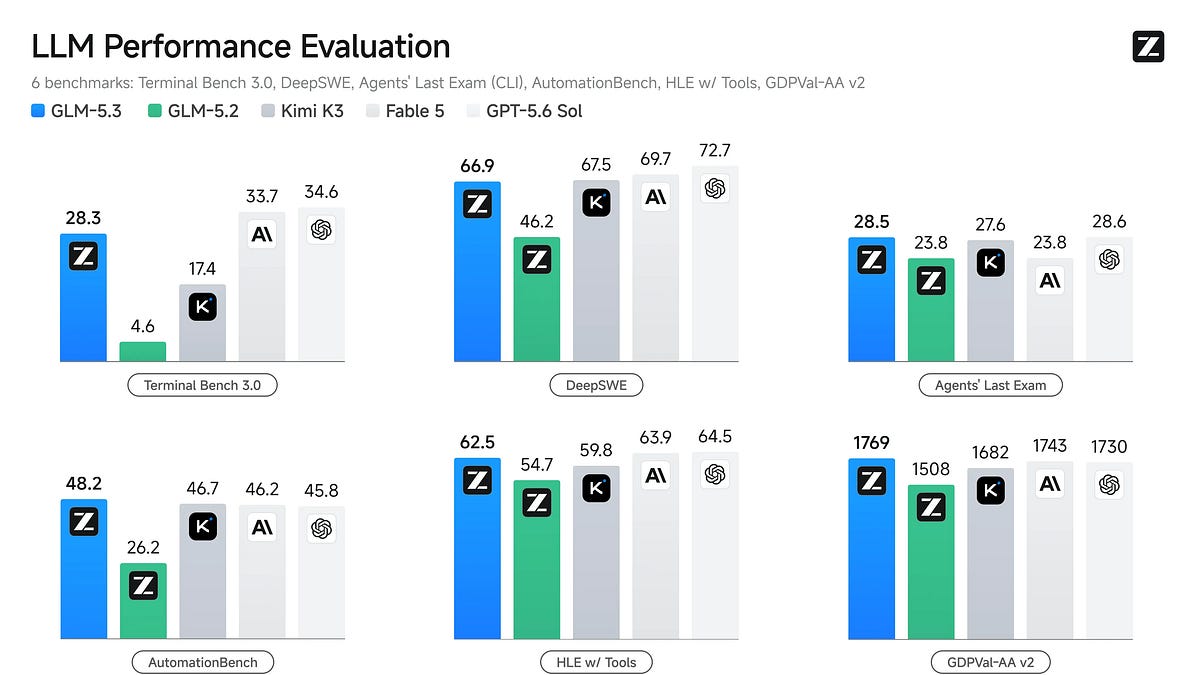
Qwen 3.8 27B released, setting a new performance benchmark for mid-sized models and showing ~3x speedups on Apple Silicon via
Google's Homomorphic Encryption integration makes private AI inference practical, a major milestone for enterprise compliance and data security. source
Vero introduced a framework for AI agents to build formally verified software, bridging the gap between generative code and machine-checked correctness. source
Hugging Face's Summer 2026 State of Open Models report confirms a massive shift toward specialized, smaller-parameter models outperforming generalist giants in vertical tasks. source
- Mole, a deep research agent for the terminal, gained traction for its focus on budget-constrained, source-verified research. source
🚀 Opportunity of the Day2 min read
The single best thing to build right now.
Deterministic Agent-State Compiler
- The gap: Current agentic frameworks (like LangGraph or AutoGen) rely on runtime interpretation of agent flows, which are inherently non-deterministic and difficult to audit for enterprise compliance.
- Why now: The emergence of MARC v1 and the formal verification capabilities shown in Vero (2026-08-13) prove that agentic workflows can be treated as compilable, verifiable state machines rather than dynamic prompt chains.
- Build as: A developer tool (compiler/transpiler) that takes a high-level agent-flow definition (e.g., YAML/JSON) and compiles it into a deterministic, type-safe execution graph that enforces state-transition constraints.
- Wedge & moat: The wedge is "Compliance-as-Code" for AI agents; the moat is the proprietary verification engine that ensures the agent cannot deviate from the defined state-graph during runtime.
- Already heating up: (speculative — no direct product yet, but high interest in deterministic agent flows on r/LocalLLaMA and HN).
- Closest existing solution: AutoGen provides orchestration but lacks the formal state-verification layer; LangGraph provides state management but remains highly dynamic.
- First step this week: Prototype a "State-Graph Validator" that takes a JSON definition of an agent flow and checks for deadlocks or non-deterministic branching paths before execution.
📊 Stack Signals — Pick Your Tools3 min read
What moved in tools, benchmarks & funding.
🧱 Standards, Protocols & the Agent Platform Stack
Benchmarks & Evals
Repo & Model Velocity
- Mole — Rapidly gaining stars for its terminal-first research agent approach.
- Qwen 3.8 35BA3B — Spotted in commit history; high developer interest in the MoE architecture.
Funding & Launches — with Thesis
AI by Hand — Launching a focus on human-in-the-loop AI design. Thesis: Betting that "AI-by-hand" (manual curation) will outperform automated data-scaling for high-stakes enterprise applications.
🔬 Deep Reads — For When You Have Time (skip if rushed)
The one paper to actually read this week.
📖 The One Deep Read
MARC v1: An Open-Source Multi-Agent Framework for Clinical AI Reasoning and Coordination by Saisha Shetty and Satvik Tripathi. This paper is essential reading because it provides a concrete, deterministic alternative to the "prompt-chaining" chaos currently dominating agentic development. It demonstrates how to decompose complex reasoning into role-specialized agents, a pattern that will become the standard for enterprise agent platforms.
📑 Supporting Research