| Tuesday, August 18, 2026 |
👋 In Brief30 sec read
Today’s signal is defined by a massive shift toward infrastructure consolidation, headlined by Stripe’s $7B acquisition of OpenRouter, signaling that model routing and API orchestration are now core financial utilities. Meanwhile, the agentic stack is rapidly maturing through new memory protocols and transactional agent frameworks that move us beyond simple prompt-response loops into autonomous, multi-agent ecosystems.
📌 Top Stories — Today's Biggest Moves (skim)
The day's highest-signal stories, ranked by builder-relevance — each linked to its primary source.


⚡ The Pulse — If You Only Read One Thing90 sec read
The day's signal in 90 seconds — start here.
🎯 Today's Game-Changer
Stripe has acquired OpenRouter for $7B, marking the most significant consolidation in the AI infrastructure layer to date. By integrating the leading model-routing and API-aggregation platform into its financial stack, Stripe is positioning itself as the primary clearinghouse for AI compute, effectively commoditizing model access and signaling that the "LLM API" layer is now a critical, high-volume financial utility rather than a niche developer tool.
📍 In a Nutshell
- AWS launches
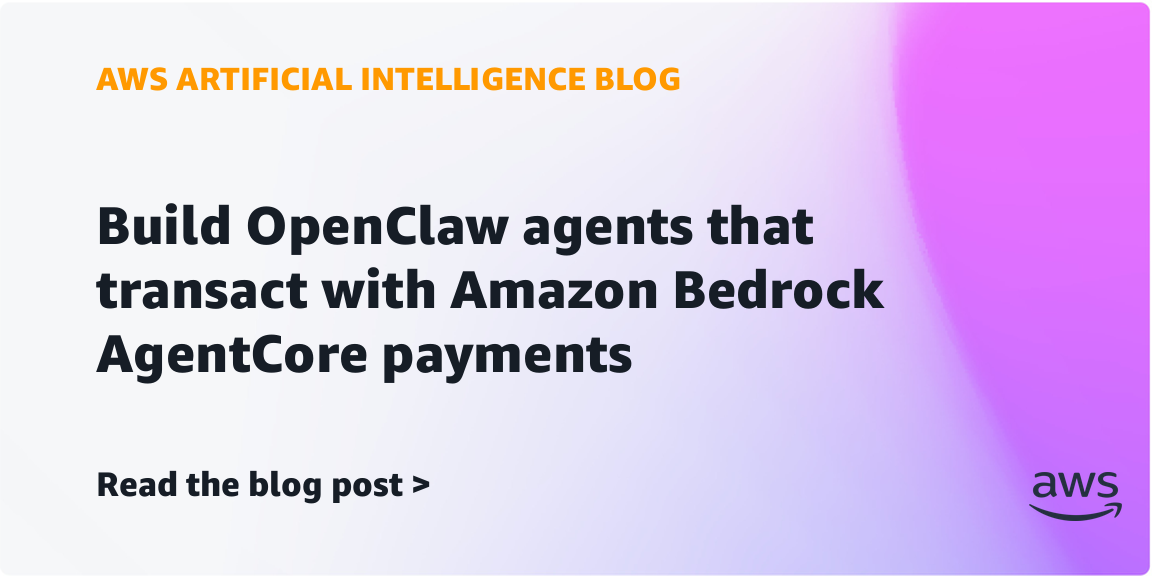
OpenClaw agent payments — enabling autonomous agents to manage wallets and pay for API/MCP resources via Bedrock AgentCore.
MELD protocol⚠ introduced — a new standard for reconciling contradictory knowledge across distributed agentic memories.
Snowflake's Jira compromised — a critical security incident where an AI-generated "Autofix" allowed unauthorized access, highlighting the dangers of unverified agentic code execution.
DeepSeek V4 Pro 0813⚠ benchmarks — Together AI shows that a Pro-first cascade hits 83% pass@1 on DeepSWE, outperforming single-model deployments.
UI-Mate-27B released — an open-weight foundation model specifically optimized for long-horizon GUI navigation and OS-level automation.
Qwen 3.8 27B hits GPT-5.6 parity — the model achieves a 52 on the Artificial Analysis Intelligence Index, matching top-tier frontier performance at a fraction of the parameter count.
Speko (YC S26) launches — a platform that dynamically routes voice AI workflows across STT/LLM/TTS models based on cost and latency constraints.
🚀 Opportunity of the Day2 min read
The single best thing to build right now.
Agentic Memory Reconciliation Middleware
- The gap: Autonomous agents currently operate in silos; as shown in the
MELD paper, there is no standardized protocol for agents to reconcile contradictory facts or merge knowledge graphs across distributed memory stores.
- Why now: With the rise of multi-agent systems (e.g., AWS Bedrock AgentCore) and the commoditization of model routing (Stripe/OpenRouter), the bottleneck has shifted from *accessing* models to *synchronizing* the state between them.
- Build as: A middleware library (OSS) that implements the MELD protocol, providing a "Memory Reconciliation Layer" that sits between vector databases and agent planners.
- Wedge & moat: Start by solving "Memory Drift" in enterprise multi-agent coding teams; the moat is the proprietary graph-reconciliation logic that becomes the standard for agent-to-agent (A2A) communication.
- Already heating up: The
- Closest existing solution: LlamaIndex offers memory abstractions, but it lacks a formal, cross-agent reconciliation protocol for conflicting facts; this is a protocol-level play, not just a data-loading play.
- First step this week: Prototype a "Memory Conflict Resolver" that takes two JSON-LD memory snapshots from different agents and produces a merged, conflict-free graph using a small reasoning model.
📊 Stack Signals — Pick Your Tools3 min read
What moved in tools, benchmarks & funding.
🧱 Standards, Protocols & the Agent Platform Stack
Benchmarks & Evals
Repo & Model Velocity
Funding & Launches — with Thesis
Stripe / OpenRouter ($7B) — Thesis: The "LLM API" layer is being consolidated into a financial utility; expect Stripe to become the default billing/routing layer for all enterprise agentic traffic.
🔬 Deep Reads — For When You Have Time (skip if rushed)
The one paper to actually read this week.
📖 The One Deep Read
HarnessEval-W: Agentifying the Evaluation of Visual Worlds by Chen & Sun. This paper is critical because it moves evaluation away from static, scalar benchmarks toward "reasoning-based rollouts," which is the only way to trust agents operating in complex, visual environments. Read it for: A new framework for evaluating agentic reliability in visual tasks.
📑 Supporting Research