| Saturday, August 22, 2026 |
👋 In Brief30 sec read
The agentic ecosystem is shifting from "can it do the task" to "can it do the task within a governed, high-performance harness." This week, we see a massive leap in long-horizon autonomy benchmarks and a surge in infrastructure designed to move agentic workflows from prototype to enterprise-grade production.
📌 Top Stories — Today's Biggest Moves (skim)
The day's highest-signal stories, ranked by builder-relevance — each linked to its primary source.


⚡ The Pulse — If You Only Read One Thing90 sec read
The day's signal in 90 seconds — start here.
🎯 Today's Game-Changer
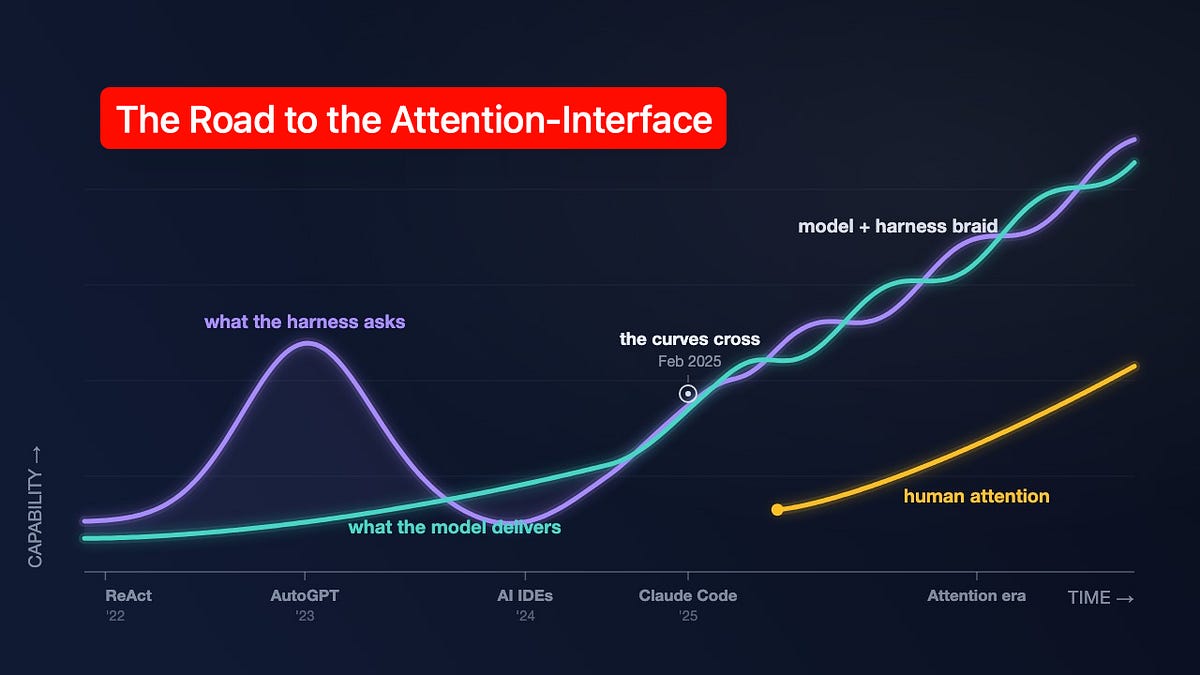
NVIDIA’s AVO architecture has reached 100% on the ARC-AGI-3 benchmark, marking a critical milestone for long-horizon autonomous agents. By decoupling the agent harness from the language model, NVIDIA has demonstrated that frontier-level reasoning is now as much about the surrounding orchestration and planning architecture as it is about the model weights themselves.
📍 In a Nutshell
- Together AI released DeepSWE benchmarks showing GLM-5.3 outperforming Claude Fable 5 on cost-efficiency for coding tasks.
source
- AWS launched Bedrock AgentCore Gateway to provide governed, auditable tool access for enterprise agents.
source
- Llama.cpp 0.2.0 is released, bringing significant performance and architectural updates to local inference. source
- Qwen 3.8 27B is trending on r/LocalLLaMA for its massive leap in reasoning and rendering capabilities.
source
- Seed, a minimal self-modifying agent harness, gained traction on HN for its focus on runtime adaptability. source
- Autolith launched, offering a programming agent with a live, interactive runtime environment.
source
- Microsoft Research updated Skala to 1.1, expanding access to predictive DFT for computational chemistry.
source
- Google Cloud detailed AlloyDB ScaNN, scaling vector search to 10 billion vectors for enterprise-grade RAG.
source
- LiquidAI released LFM2.5-DSpark, claiming up to 3.2x faster inference speeds.
source
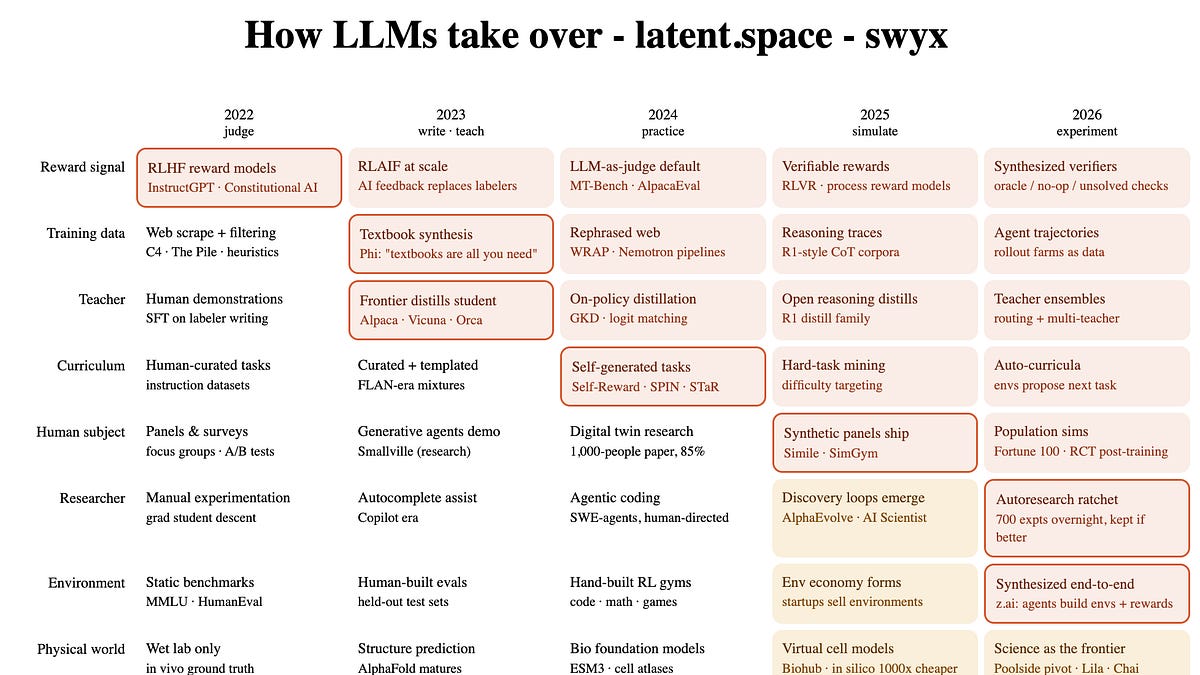
- Latent Space explored the "Agent Harness" evolution, noting that models are increasingly absorbing harness logic into their weights.
source
🚀 Opportunity of the Day2 min read
The single best thing to build right now.
Agentic Tool-Access Governance Proxy (ATGP)
- The gap: As enterprises move to multi-agent systems, there is no standardized, model-agnostic layer to govern, audit, and rate-limit tool usage across heterogeneous agent harnesses (e.g., AutoGen, Bedrock, custom).
- Why now: The release of
- Build as: OSS middleware/proxy that sits between any agent harness and the tool/API layer, providing a unified policy engine (OPA-based) for tool access.
- Wedge & moat: Wedge with a "compliance-first" tool gateway for regulated industries (FinTech/Healthcare); moat through a standardized "Tool-Manifest" format that becomes the industry standard for agent-tool interoperability.
- Already heating up: Strong demand for "governed tool access" in recent AWS/Google Cloud blog posts; 55+ points on HN for Seed shows developer appetite for better harness control.
- Closest existing solution:
- First step this week: Prototype a middleware proxy in Python that intercepts tool-calling JSON schemas from two different frameworks (e.g., LangChain and AutoGen) and enforces a unified access-control policy.
📊 Stack Signals — Pick Your Tools3 min read
What moved in tools, benchmarks & funding.
🧱 Standards, Protocols & the Agent Platform Stack
- Bedrock AgentCore Gateway [Governance/Tools] — Architect's take: Adopt for enterprise-grade tool governance; it sets the standard for how we should be thinking about agent-tool security.
- LLM 0.32.1 [Tooling] — Architect's take: Essential update for anyone using the LLM CLI/library to ensure compatibility with the latest OpenAI SDK changes.
source
Benchmarks & Evals
- ARC-AGI-3: NVIDIA AVO architecture hit 100% accuracy, setting a new bar for long-horizon autonomy.
source
- DeepSWE: Together AI reports GLM-5.3 outperforming Claude Fable 5 on pass@4, highlighting a shift toward cost-effective routing.
Repo & Model Velocity
- llama.cpp — Massive performance updates; the gold standard for local inference.
- Seed — Minimalist agent harness; gaining traction for its focus on self-modification.
Funding & Launches — with Thesis
🔬 Deep Reads — For When You Have Time (skip if rushed)
The one paper to actually read this week.
📖 The One Deep Read
Pandora's AI Model Routing Box: Efficient Allocation with Costly Value Estimation by Adam Fisch and Shubhendu Trivedi. This paper is essential for architects building multi-model systems, as it provides a rigorous framework for routing queries based on cost-benefit analysis rather than just performance metrics.
Read it for: A mathematical foundation for building cost-aware, heterogeneous AI routing systems.
📑 Supporting Research
AI4AI-Bench by Chi et al. — A new benchmark for evaluating recursive self-improvement in agents.