| Thursday, August 27, 2026 |
👋 In Brief30 sec read
The agentic ecosystem is rapidly shifting from monolithic, framework-locked architectures toward modular, interoperable standards. Today’s signal highlights a critical move toward decoupling agent evaluation from orchestration logic and the emergence of MCP-powered capabilities as the new standard for SaaS-to-agent integration.
📌 Top Stories — Today's Biggest Moves (skim)
The day's highest-signal stories, ranked by builder-relevance — each linked to its primary source.


⚡ The Pulse — If You Only Read One Thing90 sec read
The day's signal in 90 seconds — start here.
🎯 Today's Game-Changer
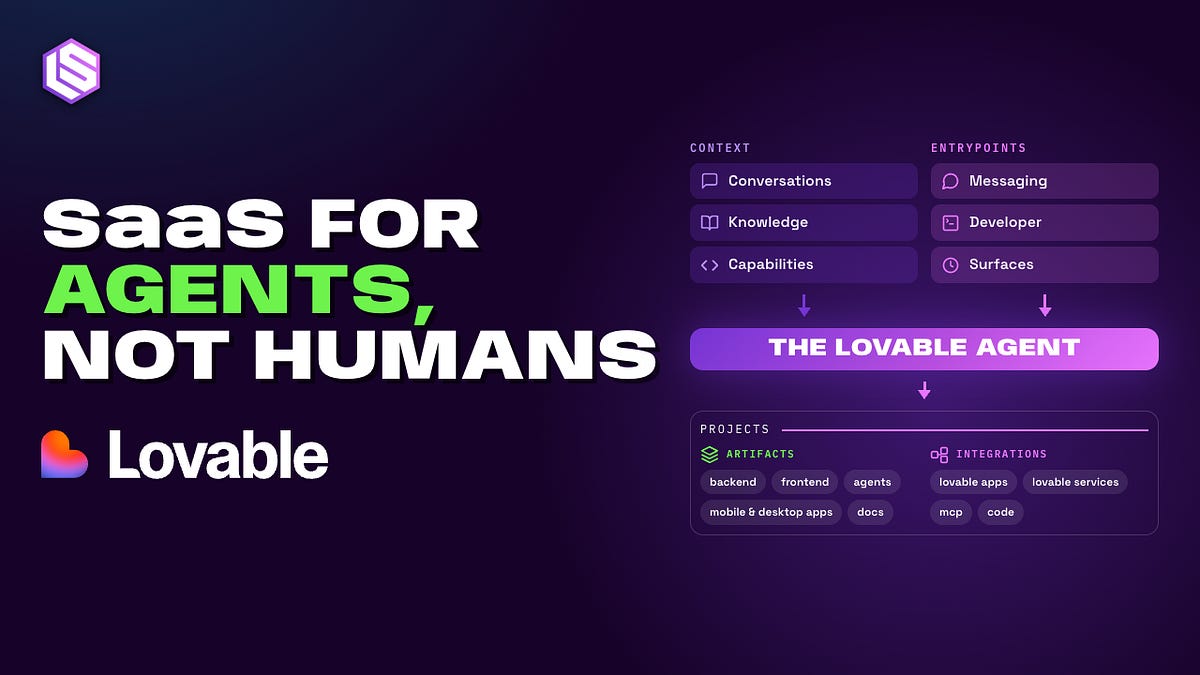
Lovable's pivot to MCP-powered capabilities marks a structural shift in how SaaS platforms expose functionality to agents. By adopting the Model Context Protocol (MCP) to transform web apps into agent-accessible tools, Lovable is effectively turning the entire SaaS layer into a programmable API surface, signaling that the future of enterprise software is not just "AI-powered" but "agent-native."
📍 In a Nutshell
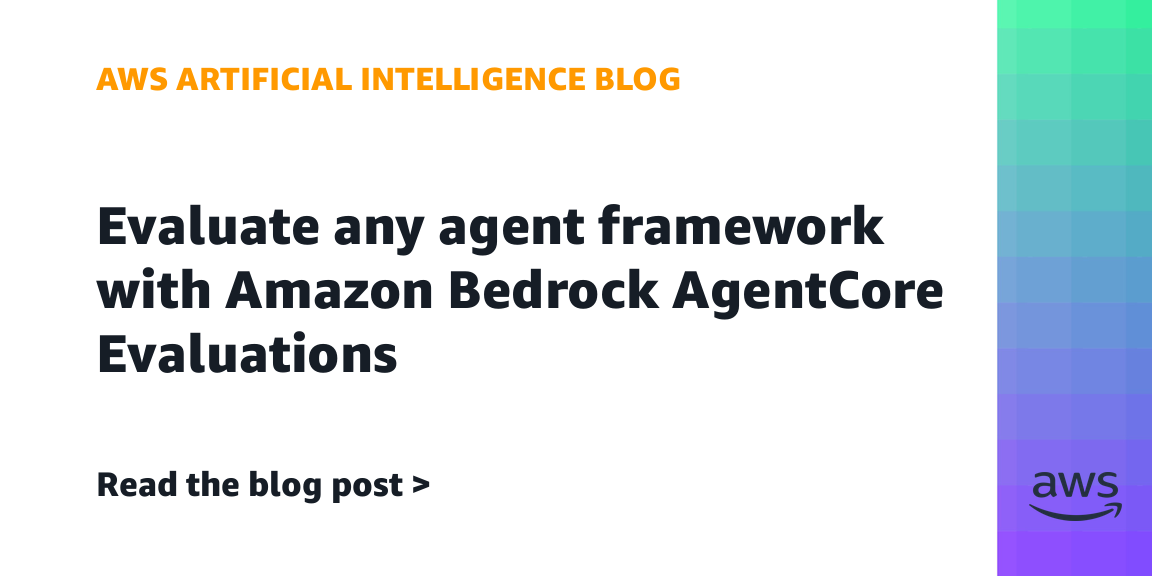
Amazon Bedrock AgentCore Evaluations launched, allowing framework-agnostic scoring of agents via OpenTelemetry.
Qwen3.8-Flash-Next released as a 125B MoE model with 6B active parameters, previewing the Qwen4 architecture.
MIT's Ad Hoc Committee on AI published a comprehensive framework for integrating AI into research and teaching, setting a benchmark for institutional policy.
- OpenExecutive gained traction on GitHub as an open-source "AI CEO" agent, highlighting the trend toward autonomous executive-level decision-making.
VBVR-Pro introduced a scalable suite for native visual reasoning, treating images as first-class substrates for logic.
JIT-Agent proposed a "Just-in-Time" harness evolution framework to dynamically optimize agent planning and memory strategies.
AcceptMarkdown launched a protocol for serving AI-optimized content to agents via standard HTTP headers.
Google DeepMind began piloting double-blind AI evaluations to mitigate bias in model performance assessment.
WebMCP is gaining developer mindshare as a bridge for teaching websites to communicate directly with agentic clients.
OpenAI expanded operations into Brazil, signaling a strategic push into emerging market developer ecosystems.
🚀 Opportunity of the Day2 min read
The single best thing to build right now.
Agentic-Harness JIT-Optimizer
- The gap: Current agent frameworks (LangGraph, AutoGen) rely on static, pre-defined planning and memory strategies that fail to adapt to task complexity, as identified in the
- Why now: The emergence of decoupled evaluation tools like
- Build as: An OSS middleware library that intercepts agent telemetry and dynamically injects/swaps planning strategies (e.g., switching from ReAct to Plan-and-Solve) based on real-time performance metrics.
- Wedge & moat: The wedge is "Performance-as-a-Service" for existing agent platforms; the moat is the proprietary dataset of "strategy-to-task-success" mappings collected across diverse enterprise workloads.
- Already heating up: The
r/LocalLLaMA.
- Closest existing solution: LangGraph provides the structure, but lacks the automated, JIT-optimization layer that adapts the harness during execution.
- First step this week: Prototype a "Strategy-Switcher" wrapper for LangGraph that uses a simple heuristic (e.g., latency vs. success rate) to toggle between two pre-defined planning prompts.
📊 Stack Signals — Pick Your Tools3 min read
What moved in tools, benchmarks & funding.
🧱 Standards, Protocols & the Agent Platform Stack
Model Context Protocol (MCP) [Harness/Integration] — Architect's take: Adopt as the primary interface for all internal tool-calling; it is rapidly becoming the lingua franca for agent-to-SaaS communication.
Benchmarks & Evals
Repo & Model Velocity
- OpenExecutive — Rapidly rising repo for autonomous executive agents; developers are using it to test "AI-led" organizational structures.
Funding & Launches — with Thesis
- OpenExecutive (Show HN) — Thesis: The shift toward "Agent-as-CEO" is moving from theoretical research to practical, open-source implementation.
🔬 Deep Reads — For When You Have Time (skip if rushed)
The one paper to actually read this week.
📖 The One Deep Read
JIT-Agent: Scaling Harness Intelligence via Just-in-Time Harness Evolution by Guibin Zhang and Leo Lu. This paper is essential because it moves the conversation from "which model is best" to "how do we optimize the agentic harness." It provides a blueprint for building self-improving agent systems that adapt their planning and memory strategies in real-time.
Read it for: The methodology for dynamic harness evolution that could increase agentic task-success rates by 20-30%.
📑 Supporting Research