| Saturday, August 29, 2026 |
👋 In Brief30 sec read
The AI ecosystem is undergoing a major structural realignment as the OpenAI-Cursor partnership dissolves following SpaceX's acquisition, forcing a rapid pivot toward model-agnostic IDE architectures. Simultaneously, the frontier is shifting toward test-time optimization and execution-audit patterns, signaling that the next phase of agentic development is less about raw model scale and more about reliable, governed, and portable execution.
📌 Top Stories — Today's Biggest Moves (skim)
The day's highest-signal stories, ranked by builder-relevance — each linked to its primary source.

⚡ The Pulse — If You Only Read One Thing90 sec read
The day's signal in 90 seconds — start here.
🎯 Today's Game-Changer
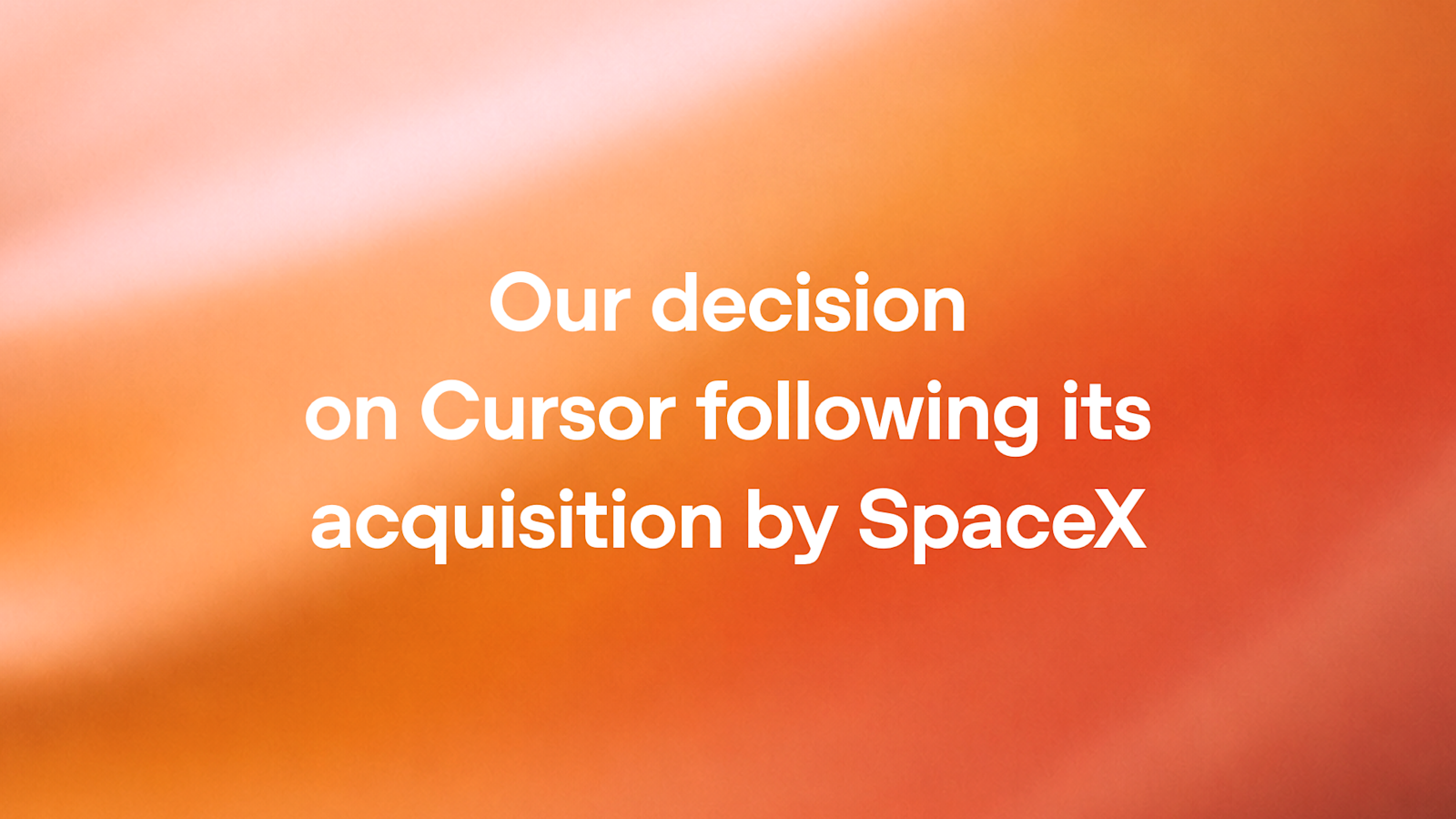
OpenAI has officially announced the wind-down of its contract providing models to Cursor following the IDE's acquisition by SpaceX. This move effectively terminates the tight integration between the leading AI-native code editor and OpenAI's frontier models, creating an immediate, massive vacuum in the developer tooling stack that necessitates a shift toward model-agnostic, multi-provider orchestration for agentic IDEs.
📍 In a Nutshell
Together AI releases GLM-5.3 Flash⚠ — delivers 94.4% of the performance of the base model at 17x lower cost, setting a new bar for high-throughput coding agents.
SWE-Prime paper released — introduces a method to resolve software issues with fewer trajectories, significantly reducing the compute overhead for agentic coding.
Qwen 3.8 27B local inference — achieves 50 tok/s on consumer 16GB GPUs, proving local agents are now viable for complex, long-context tasks.
AWS enables NVIDIA MPS for ASR — reduces inference costs by 75% by optimizing GPU utilization for speech models.
Gemini Omni 1.1 and Cohere Parse launch — expanding the multimodal and data-extraction capabilities available to enterprise platforms.
Open ASR Leaderboard adds Global South languages — a vital step toward inclusive, global-scale speech agent deployment.
🚀 Opportunity of the Day2 min read
The single best thing to build right now.
Model-Agnostic IDE Orchestration Layer (MAIOL)
- The gap: The sudden decoupling of Cursor from OpenAI exposes the fragility of "model-locked" IDEs; there is no standardized, open-source middleware that allows developers to swap between frontier models (Claude, Gemini, Llama, GLM) while maintaining consistent agentic state and context.
- Why now: The SpaceX acquisition of Cursor has created a "trust vacuum" among enterprise developers who cannot rely on a single vendor's API contract for their core development environment.
- Build as: An open-source VS Code extension/SDK that acts as a "Model Router" for agentic IDEs, implementing a standardized interface for tool-use, memory, and context-window management across providers.
- Wedge & moat: The wedge is "IDE-agnostic agent portability"; the moat is the accumulation of "Agentic-Context-Profiles" that allow developers to switch models without losing their agent's learned habits or project-specific knowledge.
- Already heating up: High interest in
- Closest existing solution: Continue.dev is the closest, but it lacks the advanced "Agentic-State-Reconciliation" and "Multi-Model-Routing" required for high-stakes enterprise coding environments.
- First step this week: Prototype a "Model-Switching-Proxy" that intercepts agentic tool-calls and reroutes them to different model endpoints based on a latency/cost/capability budget.
📊 Stack Signals — Pick Your Tools3 min read
What moved in tools, benchmarks & funding.
🧱 Standards, Protocols & the Agent Platform Stack
MCP (Model Context Protocol) [Memory/Context] — Architect's take: Prototype; it is becoming the de facto standard for connecting local data to agentic IDEs.
- OpenAI Apps SDK [Harness] — Architect's take: Watch; the recent Cursor news makes the "OpenAI-only" SDK less attractive for enterprise-wide deployments.
Benchmarks & Evals
Repo & Model Velocity
- llama.cpp — The primary engine for local inference; continues to see massive velocity as it integrates support for Qwen 3.8.
Funding & Launches — with Thesis
🔬 Deep Reads — For When You Have Time (skip if rushed)
The one paper to actually read this week.
📖 The One Deep Read
SWE-Prime: Fewer Trajectories, Better Performance by Zheng and Ye. This paper is essential because it challenges the "more data is better" paradigm in agentic coding, proving that high-quality, curated trajectories outperform massive, noisy datasets. Read it for: The methodology on trajectory pruning for agentic fine-tuning.
📑 Supporting Research