| Sunday, September 6, 2026 |
👋 In Brief30 sec read
The agentic stack is rapidly shifting from monolithic, opaque reasoning loops toward modular, version-controlled, and infrastructure-integrated architectures. Today’s signal highlights a critical move toward git-native memory standards and physical-world model factories, signaling that the next phase of enterprise AI is about state persistence and operational reliability rather than just raw model performance.
📌 Top Stories — Today's Biggest Moves (skim)
The day's highest-signal stories, ranked by builder-relevance — each linked to its primary source.

⚡ The Pulse — If You Only Read One Thing90 sec read
The day's signal in 90 seconds — start here.
🎯 Today's Game-Changer
The release of OKF Agent Memory introduces a git-native, persistent memory standard for coding agents, effectively treating agent state as code. By leveraging git for versioning and diffing, this framework solves the "black box" memory problem, allowing architects to audit, revert, and branch agentic context just like source code, which is a prerequisite for production-grade agentic systems.
📍 In a Nutshell
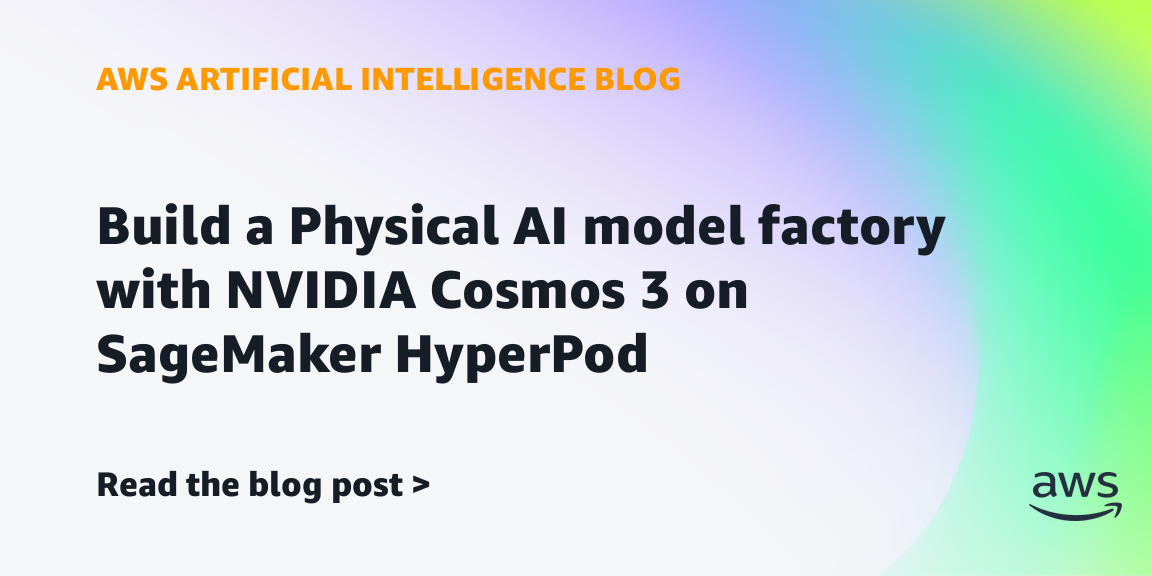
- AWS launched a physical AI model factory using NVIDIA Cosmos 3 on SageMaker HyperPod, enabling continuous synthetic data pipelines for robotics.
source
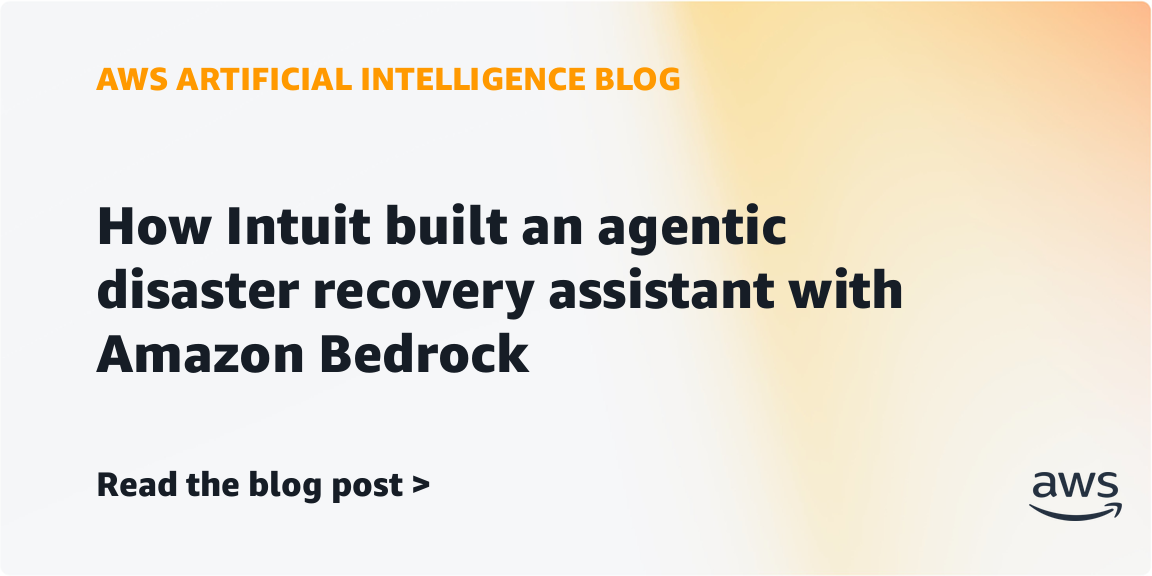
- Intuit deployed an agentic disaster recovery assistant on Amazon Bedrock, demonstrating a pattern for high-stakes, human-in-the-loop production failovers.
- MCP (Model Context Protocol) adoption expands with new Blender integration, allowing agents to manipulate 3D environments via local MCP servers.
source
- Qwen 3.8-Flash-Next shows high-efficiency inference (45 tok/s on M4 Max), challenging the performance-per-watt ceiling for local agentic deployments.
source
- America's two largest school districts have imposed AI moratoriums, signaling a growing regulatory and policy friction layer for consumer-facing agentic platforms.
source
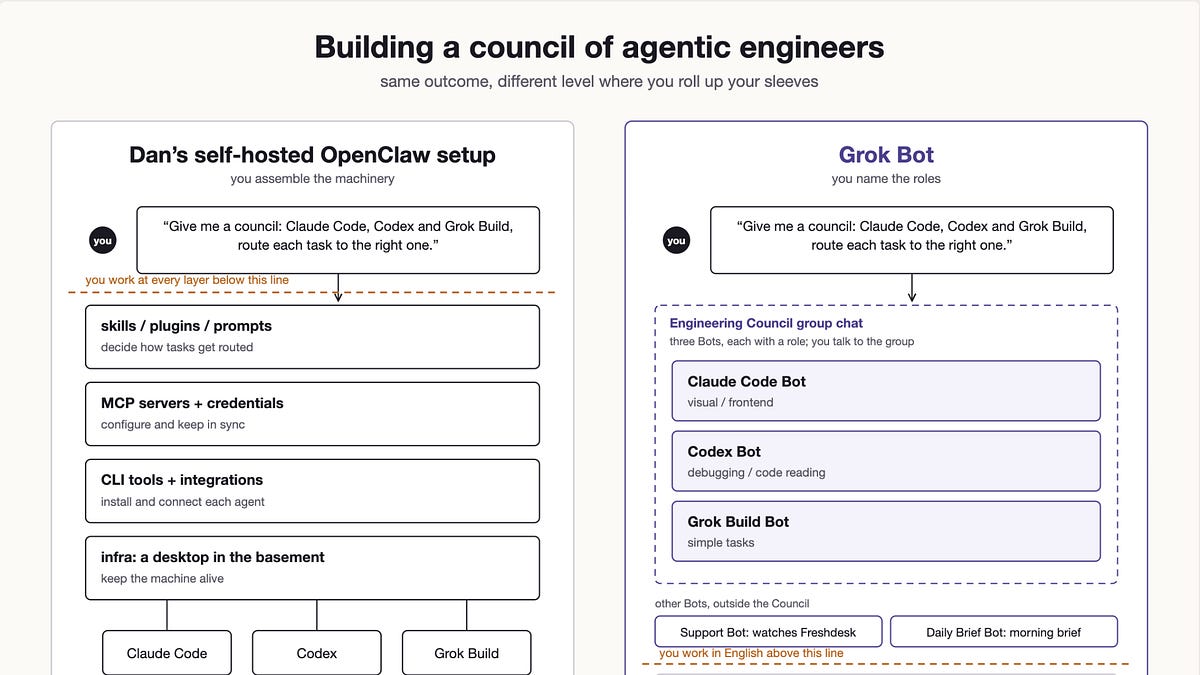
- Grok Bot is being positioned as a high-abstraction programming interface, shifting the focus from raw code generation to intent-based system orchestration.
source
- Amazon Bedrock added support for Amazon Textract integration, enabling better RAG performance on complex, multi-modal enterprise documents.
🚀 Opportunity of the Day2 min read
The single best thing to build right now.
Agentic-Memory-Consistency-Layer
- The gap: Current agentic memory stores (vector DBs, local JSON, or git-based) are fragmented and lack a unified reconciliation protocol, leading to "context drift" when multiple agents or human operators modify the same state.
- Why now: The emergence of git-native memory (OKF) combined with the proliferation of MCP-based tool access creates a need for a middleware that can resolve conflicts between heterogeneous memory sources in real-time.
- Build as: Developer infra / Middleware — a "Git-for-Agent-State" proxy that sits between the agent harness and the storage layer to enforce consistency and provide a unified API for state snapshots.
- Wedge & moat: The wedge is a "State-Reconciliation-as-a-Service" for multi-agent teams; the moat is the proprietary conflict-resolution logic that prevents agentic hallucinations caused by stale or conflicting context.
- Already heating up: 69 points on HN for OKF Memory in 24 hours; increasing chatter on r/LocalLLaMA regarding local state management for complex agentic workflows.
- Closest existing solution: OKF Agent Memory provides the storage format, but lacks a cross-platform reconciliation engine for distributed agent systems.
- First step this week: Build a prototype "State-Sync-Proxy" that intercepts read/write calls to an MCP-based memory server and logs state diffs to a central git repository for auditability.
📊 Stack Signals — Pick Your Tools3 min read
What moved in tools, benchmarks & funding.
🧱 Standards, Protocols & the Agent Platform Stack
- OKF Agent Memory [Memory/Context] — Architect's take: Prototype now; this is the first viable standard for git-native agent state management. source
- MCP Blender Extension [Tools/Integrations] — Architect's take: Watch; signals a move toward standardized 3D/spatial tool access for agents.
Benchmarks & Evals
- Qwen 3.8-Flash-Next — Demonstrates competitive inference speed on Apple Silicon, setting a new bar for local-first agentic infra.
Repo & Model Velocity
- okf-agent-memory — Rapidly gaining mindshare as the standard for git-native agent persistence.
Funding & Launches — with Thesis
- Intuit Disaster Recovery Agent — Thesis: Enterprise-grade agentic platforms are moving toward "failover-as-a-service" where agents manage infrastructure reliability.
🔬 Deep Reads — For When You Have Time (skip if rushed)
The one paper to actually read this week.
📖 The One Deep Read
AI, Tools and Transformation by Ben Evans. This essay provides the necessary macro-context for why AI is currently in a "tooling" phase rather than a "transformation" phase, helping architects understand the long-term adoption curve of agentic systems. Read it for: A clear-eyed view of how AI tools integrate into existing enterprise workflows without over-hyping the immediate impact.
📑 Supporting Research
Code2LoRA — Research on hypernetwork-generated LoRA adapters for code models, relevant for optimizing agentic coding performance.