| Friday, September 11, 2026 |
👋 In Brief30 sec read
The industry is rapidly shifting from conversational interfaces to managed agentic infrastructure, with today's release of the OpenAI Agents API signaling that orchestration and long-running state management are moving from custom-built harnesses to platform-native services. This transition creates a massive opening for developers to build the middleware that bridges these managed platforms with specialized, high-fanout execution environments.
📌 Top Stories — Today's Biggest Moves (skim)
The day's highest-signal stories, ranked by builder-relevance — each linked to its primary source.


⚡ The Pulse — If You Only Read One Thing90 sec read
The day's signal in 90 seconds — start here.
🎯 Today's Game-Changer
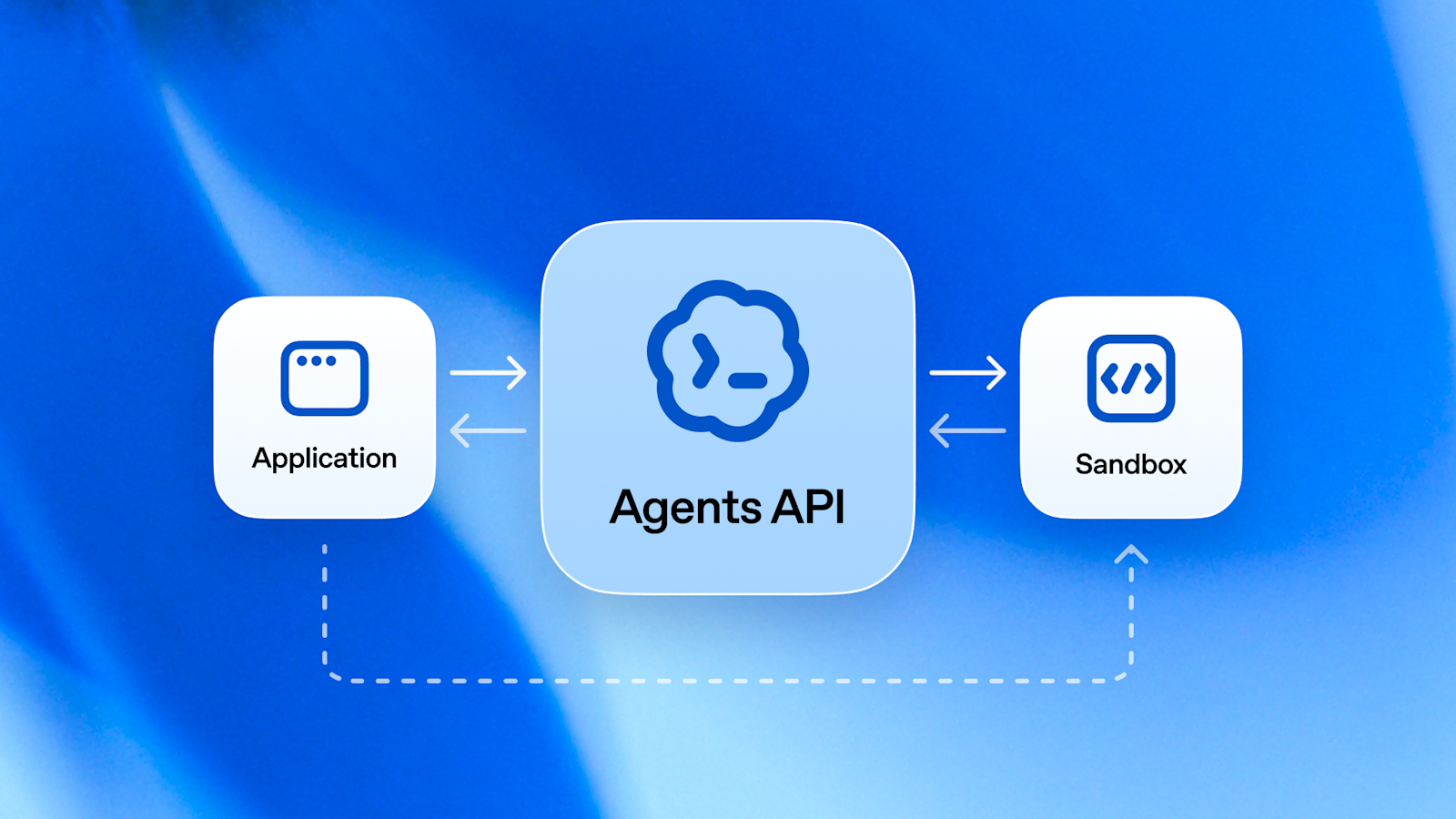
OpenAI has launched the Agents API, a managed service designed to handle orchestration, long-running sessions, and tool use via the Codex harness. By abstracting the complexity of stateful agent execution and session management into a cloud-native API, OpenAI is effectively commoditizing the "harness" layer of the agentic stack, forcing platform architects to decide whether to build on top of managed primitives or maintain proprietary orchestration logic.
📍 In a Nutshell
SenseNova-U1.5 released as an 8B-MoT native unified multimodal model, pushing encoder-free visual intelligence.
COBRA-Skills introduces a contextual bandit-guided evolution method for optimizing reusable agent skills with minimal task data.
AWS SageMaker prefix-aware routing now optimizes KV cache warmth for Llama 3.1 70B, reducing P50 time-to-first-token.
Together AI preemptible compute launches at 50% of on-demand rates, targeting cost-sensitive training and inference workloads.
Terminal Bench v4 scores are gaining traction as a more accurate reflection of model intelligence than standard benchmarks.
ChatGPT Work Data Agent launched, allowing enterprise users to build interactive dashboards from internal data via natural language.
🚀 Opportunity of the Day2 min read
The single best thing to build right now.
Agentic-Sandbox-Memory-Manager (ASMM)
- The gap: High-fanout agent workloads (e.g., automated testing, parallel research) are hitting memory walls because current sandbox runtimes treat every session as an isolated, heavy-weight instance, ignoring the shared trajectory patterns identified in
- Why now: The release of the
- Build as: Developer tool / Middleware library that sits between the agent orchestration layer and the sandbox runtime (e.g., Docker/Firecracker) to deduplicate memory states.
- Wedge & moat: The wedge is a "drop-in" memory optimization for existing agent harnesses; the moat is the proprietary compression algorithm for shared sandbox state snapshots.
- Already heating up: (speculative — no validation signal yet), though the paper
- Closest existing solution:
Modal or
- First step this week: Prototype a "Snapshot-Diff" mechanism for a standard Python-based agent harness that identifies shared memory pages across 10 concurrent sessions and reports the potential RAM savings.
📊 Stack Signals — Pick Your Tools3 min read
What moved in tools, benchmarks & funding.
🧱 Standards, Protocols & the Agent Platform Stack
Benchmarks & Evals
Repo & Model Velocity
Funding & Launches — with Thesis
🔬 Deep Reads — For When You Have Time (skip if rushed)
The one paper to actually read this week.
📖 The One Deep Read
COBRA-Skills: Contextual Bandit-Guided Evolution for Agent Skill Optimization by Pingchen Lu et al. This paper is essential because it addresses the "skill acquisition" problem in agents, moving away from expensive execution-based evaluation toward a more efficient, evolutionary approach. It is a must-read for anyone building agentic platforms that need to scale skill sets without massive data overhead.
Read it for: A blueprint for building self-improving agent skill libraries.
📑 Supporting Research